
Does the perfect Southern California lifestyle actually require a thirty-page rulebook and a dedicated architectural review board? For many considering moving to Palos Verdes, the answer is a resounding yes, provided you understand how to navigate the system. You likely recognize the Peninsula for its dramatic cliffs and eucalyptus-lined lanes, but you might also feel overwhelmed by the distinct personalities of its four cities and the legendary rigor of the local Art Jury. It's natural to feel a bit of friction when balancing the desire for a coastal sanctuary with the practicalities of a Los Angeles commute.
This 2026 strategic guide offers a comprehensive, expert-led analysis designed to turn that uncertainty into a clear plan of action. I'll provide the data-backed insights you need to distinguish between the equestrian trails of Rolling Hills and the cliffside estates of Palos Verdes Estates. You'll gain a thorough understanding of the PVPUSD school system's current standing and the specific regulatory frameworks that preserve the area's unique character. By the end of this analysis, you'll have a tactical roadmap for your home search that aligns your lifestyle goals with the Peninsula's geographic and civic realities.
Key Takeaways
- Identify which of the four Peninsula cities best suits your lifestyle by comparing the historic governance of Palos Verdes Estates with the diverse residential options in Rancho Palos Verdes.
- Navigate the complexities of the Art Jury and local building regulations to ensure your property renovation plans align with the Peninsula's strict architectural standards.
- Gain a strategic advantage in your search by understanding how the PVPUSD school system and local conservancy lands impact long-term real estate value and community character.
- Develop a realistic logistical plan for moving to Palos Verdes that accounts for specific coastal microclimates and the unique commute patterns of the "Hill."
- Utilize a methodical, research-based approach to uncover off-market opportunities in a highly competitive and low-inventory market.
Understanding the Palos Verdes Peninsula: A 2026 Overview
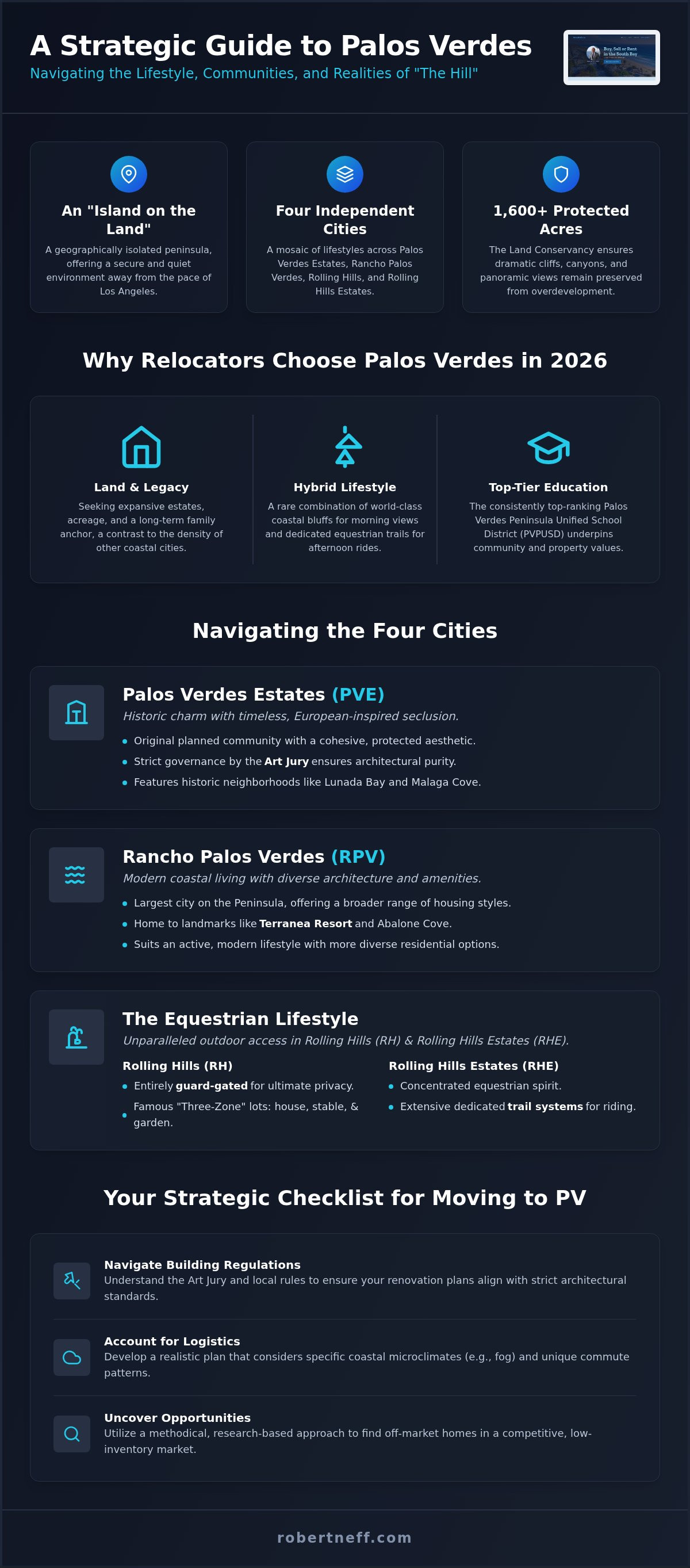
Moving to Palos Verdes requires a fundamental shift in perspective. Most observers view the region as a single destination, but it's actually a sophisticated collection of four independent cities: Palos Verdes Estates, Rancho Palos Verdes, Rolling Hills, and Rolling Hills Estates. Each municipality operates with its own council, zoning laws, and civic personality, creating a mosaic of lifestyle options. This area was famously described by historian Carey McWilliams as an "Island on the Land." This isn't just a poetic phrase; it describes the geographic reality of a peninsula bounded by the Pacific and separated from the Los Angeles basin by a rugged ridge. For residents, this isolation is a primary luxury. It creates a quiet, secure environment that feels worlds away from the frantic pace of Silicon Beach or downtown Los Angeles.
The Geography of the Peninsula
The landscape is the defining feature of life on the "Hill." With 400-foot cliffs dropping into the Pacific and elevations reaching nearly 1,500 feet, the topography is truly dramatic. The Palos Verdes Peninsula Land Conservancy manages over 1,600 acres of open space, ensuring that the natural beauty remains protected from overdevelopment. This rugged terrain creates natural neighborhood pockets. Some areas offer wind-sheltered canyons with deep privacy, while others provide panoramic views of the Catalina Channel. Understanding these geographic nuances is vital because the terrain influences everything from your daily commute to the amount of coastal fog your backyard receives.
Why Relocators Choose PV in 2026
As we analyze the 2026 market, the primary motivation for relocators is the desire for land and legacy. While the "Sand Section" of Manhattan Beach offers proximity to the water, it often comes at the cost of density and smaller lot sizes. Conversely, the Peninsula provides expansive estates, often with enough acreage for equestrian facilities or private orchards. Families moving to Palos Verdes are typically looking for a long-term anchor. The Palos Verdes Peninsula Unified School District (PVPUSD) remains a central pillar of this decision. Its consistent ranking as one of the top-performing districts in California provides a sense of security for parents and a strong foundation for property values. It's a rare hybrid lifestyle where you can enjoy world-class coastal bluffs in the morning and ride horses on dedicated trails in the afternoon.
Navigating the Four Cities: Distinct Neighborhood Personalities
Choosing a home on the Peninsula requires more than just picking a view. It involves selecting a specific governance and social rhythm. While the entire area shares a zip code prefix, the four cities offer radically different experiences. For those moving to Palos Verdes, the first decision often involves choosing between the historic preservation of the coast and the expansive, modern variety of the hillsides.
Palos Verdes Estates vs. Rancho Palos Verdes
Palos Verdes Estates (PVE) is the Peninsula’s original planned community. It's defined by the strict oversight of the Art Jury, which ensures every structure adheres to specific Mediterranean or European architectural standards. This creates a timeless, cohesive aesthetic that you won't find elsewhere. Life in neighborhoods like Lunada Bay or Malaga Cove feels European and secluded. Conversely, Rancho Palos Verdes (RPV) is the largest city and offers a broader range of housing styles, from mid-century modern to contemporary builds. RPV is home to landmarks like the Terranea Resort and Abalone Cove, offering a more active, modern coastal lifestyle. If you are considering buying an oceanfront home in South Bay, PVE offers historic charm while RPV provides modern luxury and diverse amenities.
The Equestrian Lifestyle: Rolling Hills and Rolling Hills Estates
The equestrian spirit of the Peninsula is most concentrated in Rolling Hills (RH) and Rolling Hills Estates (RHE). For families moving to Palos Verdes with a passion for the outdoors, these cities offer unparalleled access to extensive trail systems. Rolling Hills is an entirely guard-gated city. It's famous for its "Three-Zone" requirement, where each lot is traditionally divided into zones for the main house, a horse stable, and a garden. This ensures the city remains a low-density, private sanctuary. There are no streetlights here; the stars and the sound of crickets dominate the evenings. It's the ultimate choice for those seeking total anonymity and a rural feel within minutes of the city.
Rolling Hills Estates serves as the functional gateway to the Peninsula. It balances the equestrian heritage with modern convenience. It hosts the majority of the area’s commercial activity, including the Promenade on the Peninsula. While it maintains extensive bridle trails and horse-friendly zoning, it feels more connected to the surrounding South Bay. Deciding between these nuances is where data-driven guidance becomes essential. If you feel uncertain about which city aligns with your 2026 goals, consulting with a local expert can help clarify the specific benefits of each neighborhood's micro-culture.
Education, Lifestyle, and the Peninsula’s Unique Governance
Moving to Palos Verdes is often a decision rooted in the search for institutional stability. This stability is anchored by two primary forces: an exceptional school system and a rigorous local governance that preserves the area's aesthetic. While the landscape is what draws people in, the structured community standards ensure the lifestyle remains consistent for decades. Understanding these systems is essential for any prospective resident who values long-term property integrity.
The PVPUSD Advantage
The Palos Verdes Peninsula Unified School District (PVPUSD) serves as a primary economic engine for the region. Both Palos Verdes High School and Palos Verdes Peninsula High School consistently rank in the top tier of national academic lists. College matriculation rates are remarkably high, with a vast majority of graduates attending four-year universities. The district utilizes a neighborhood school model, which creates tight-knit social circles among families. It's a strategic necessity to verify school boundaries during your search. These lines don't always follow city borders; a house in one city might be zoned for a school in another, affecting both your daily routine and resale value.
The Art Jury and Architectural Integrity
For those looking at Palos Verdes Estates, the Art Jury is a central part of homeownership. This body reviews every exterior modification, including landscaping and paint choices. The goal is to maintain the original Mediterranean and European architectural vision established in the 1920s. While the review process is detailed, it protects your property value by preventing architectural outliers. This level of aesthetic control is a stark contrast to the cost of living in El Segundo CA, where regulatory environments favor a more industrial and modern residential mix. In PVE, the rules ensure that a neighbor's renovation won't obstruct your coastal view.
Recreation and Equestrian Heritage
The Peninsula’s recreational assets are as diverse as its topography. Golf is a major draw, featuring the private Palos Verdes Golf Club and the scenic Trump National Golf Club Los Angeles. Beyond the greens, the area boasts a deeply ingrained equestrian heritage. You'll find over 50 miles of dedicated bridle paths connecting neighborhoods to community stables. For families moving to Palos Verdes who value the outdoors, the Portuguese Bend Reserve offers sprawling trails through protected conservancy land. It's a rare environment where world-class education meets a rugged, outdoor-focused lifestyle.
Practical Logistics: Microclimates, Commutes, and Maintenance
The physical reality of the Peninsula is shaped by its isolation. While the views are peerless, moving to Palos Verdes requires a pragmatic understanding of how the land affects your daily rhythm. The "Hill" operates on its own set of rules, from the way traffic flows down Hawthorne Boulevard to the specific way salt air interacts with your home’s exterior finishes. Mastering these logistics is the difference between a stressful transition and a successful relocation.
The Commuter’s Reality
Living on the Peninsula involves a calculated trade-off. You're choosing significantly more square footage and privacy in exchange for a longer "Hill" commute. During peak hours, estimated drive times to El Segundo range from 30 to 45 minutes. Reaching Playa Vista typically takes 45 to 60 minutes, while a trip to Downtown Los Angeles can exceed an hour. Most residents find the return trip up the Hill to be a psychological reset, leaving the city's congestion behind for the quiet of the coastal bluffs. To ensure you're financially prepared for this high-value investment, securing a South Bay mortgage pre-approval is a critical first step in your strategic roadmap.
Microclimates and Marine Layers
The Peninsula’s varied topography creates distinct microclimates that can change block by block. Residents often distinguish between the "Sunside" and the "Fogside." The western and southern slopes, including Palos Verdes Estates and parts of Rancho Palos Verdes, are more prone to the marine layer. This thick coastal fog provides natural cooling but also brings high salinity. Conversely, the inland-facing slopes of Rolling Hills Estates often stay sunny and warmer throughout the day. This moisture variation requires specific maintenance strategies. Homes on the Fogside need high-grade, corrosion-resistant hardware and frequent exterior rinsing to combat salt-air oxidation.
Geological and Utility Considerations
The ground itself requires expert attention. Several areas on the Peninsula are part of Geological Hazard Abatement Districts (GHAD), where specific taxes fund the monitoring and mitigation of land movement. Furthermore, if you're looking at property in Rolling Hills, you must account for septic systems, as most of that city is not connected to the municipal sewer line. Proper hillside drainage is another non-negotiable factor; you must ensure water is directed away from slopes to maintain soil stability. If these technical nuances seem complex, you can schedule a strategic relocation consultation with me to review the specific geological and utility data for your target neighborhoods.
Strategic Buying: Navigating the Palos Verdes Market with Expert Guidance
Success in the Peninsula real estate market requires more than just browsing listings. It demands a sophisticated understanding of localized inventory and city-specific regulations. Moving to Palos Verdes in 2026 means entering a low-inventory environment where the most desirable properties often change hands before reaching the public market. Without a guide who understands the nuances of the Art Jury or the specific geological requirements of each neighborhood, buyers can find themselves in high-stakes situations without the necessary data. This is where a research-based, methodical approach becomes a decisive advantage.
Identifying Opportunities in a Low-Inventory Market
Market data on the Peninsula shows a consistent pattern of limited supply and high sell-to-list ratios. To find success here, you need access to a professional network that uncovers off-market opportunities. This is particularly important for those looking for specific architectural styles or equestrian capabilities that aren't easily found on standard search portals. Understanding the seller's perspective is equally vital. By learning how to sell your South Bay coastal home, buyers gain a clearer understanding of the competitive landscape and the motivations of the residents they hope to join. This insight allows for more precise offers and smoother negotiations.
The Robert Neff Relocation Framework
My approach as Robert Neff, Ph.D., Realtor® is built on academic rigor and deep local South Bay expertise. I utilize a "listen-then-act" framework designed to reduce the friction of complex relocations. This process begins with an exhaustive analysis of your lifestyle requirements, from school proximity to microclimate preferences. We align your needs with the specific micro-cultures of the four cities. This ensures you don't just find a house, but a permanent community fit. Strategic negotiation in this market isn't about aggression; it's about leveraging data and professional relationships to reach a successful close.
The year 2026 represents a strategic window for Peninsula investment. The region remains one of the few coastal areas in Southern California where significant acreage and world-class education are paired with long-term value stability. As the demand for remote-friendly luxury estates continues to grow, securing a foothold on the Hill now offers both immediate lifestyle benefits and a durable real estate legacy. Ready to begin your search? Schedule a strategic consultation with Robert Neff, Ph.D., Realtor® to develop your personalized relocation roadmap.
Securing Your Legacy on the Peninsula
Transitioning to a life of coastal bluffs and equestrian trails is a profound shift that requires more than just a standard real estate transaction. It's about aligning your lifestyle with the specific governance and microclimates of the four distinct cities. Whether you're drawn to the architectural legacy of Malaga Cove or the private sanctuary of Rolling Hills, success depends on a methodical approach to the local market. Moving to Palos Verdes in 2026 offers a rare opportunity to invest in a community defined by academic excellence and natural preservation.
As Robert Neff, Ph.D., Realtor®, licensed under Kaminsky Real Estate Group at eXp Realty, I apply academic rigor to market analysis to ensure your transition is seamless. My deep South Bay coastal expertise allows me to navigate the regulatory hurdles and inventory gaps that often stall relocations. I'm here to provide the steady hand and local data you need to make a confident decision. Schedule a Strategic Palos Verdes Relocation Consultation today to begin your journey with a dedicated partner. Your perfect fit on the Hill is within reach.
Frequently Asked Questions
Is Palos Verdes a good place to live for families?
Yes, the Peninsula is widely considered one of the premier family environments in Southern California. The primary draw for those moving to Palos Verdes is the school district, which consistently ranks among the top in the state. Beyond academics, the region offers a safe, quiet atmosphere with over 50 miles of hiking and equestrian trails. It's a community where the local lifestyle revolves around youth sports, outdoor exploration, and neighborhood cohesion.
What is the "Art Jury" in Palos Verdes Estates?
The Art Jury is a committee within the Palos Verdes Estates Homes Association responsible for maintaining the city's architectural integrity. It reviews all exterior changes to properties, including paint colors, roof materials, and landscaping. This rigorous process ensures that homes adhere to the original Mediterranean and European aesthetic established in the 1920s. While it adds a layer of complexity to renovations, it serves to protect long-term property values and scenic coastal views.
Which of the four Palos Verdes cities is the most expensive?
Rolling Hills typically commands the highest median home prices on the Peninsula due to its large lot sizes and private, guard-gated nature. However, Palos Verdes Estates also features significant high-value estates, particularly in the Malaga Cove and Lunada Bay areas. Price points across the four cities reflect different lifestyle priorities, such as equestrian facilities versus panoramic ocean views. A strategic market analysis can help identify which city offers the best value for your specific investment goals.
How long is the commute from Palos Verdes to Los Angeles?
Commute times vary significantly based on your starting point on the "Hill" and your final destination. Reaching Downtown Los Angeles usually takes between 55 and 75 minutes during peak hours. If you're traveling to Silicon Beach or El Segundo, you can expect a 35 to 50 minute drive. Residents often view this time as a necessary trade-off for the privacy and acreage that the Peninsula provides compared to denser beach cities like Manhattan Beach.
Are there gated communities in Palos Verdes?
Yes, the Peninsula offers several gated options for those seeking enhanced privacy. Rolling Hills is the most notable, as the entire city is guard-gated and private. Within Rancho Palos Verdes, you'll find gated enclaves like Portuguese Bend and various smaller townhouse communities. These neighborhoods are particularly popular with residents who value anonymity and wish to limit through-traffic near their homes. Understanding the specific gate protocols is an essential part of your property search.
What is the difference between Palos Verdes Estates and Rancho Palos Verdes?
The main difference lies in governance and architectural style. Palos Verdes Estates is the oldest city, characterized by strict Mediterranean design codes and the oversight of the Art Jury. Rancho Palos Verdes is the largest city and offers a more diverse range of housing, from mid-century modern to contemporary luxury. RPV also hosts major amenities like the Terranea Resort and multiple public parks, providing a slightly more modern coastal experience for residents and visitors alike.
Do I need a special realtor for moving to Palos Verdes?
Working with a specialized realtor is highly recommended when moving to Palos Verdes because of the area's unique regulatory landscape. You need a partner who understands the intricacies of city-specific zoning, the Art Jury review process, and geological hazard zones. As Robert Neff, Ph.D., Realtor®, I apply a research-based methodology to help buyers navigate these complexities and uncover off-market opportunities that aren't visible on standard search platforms or generic listing sites.
Is Palos Verdes safe from coastal erosion?
Coastal erosion is a natural process that the Peninsula manages through Geological Hazard Abatement Districts (GHAD). These districts are specialized local agencies that monitor land movement and fund mitigation projects to protect infrastructure and property. While certain areas are more prone to movement than others, most residential neighborhoods remain stable. It's essential to review specific geological reports and historical data for any property located near the bluffs or within a known hazard zone before closing.


