

What should you do first when buying your first home in the South Bay: set a budget, find an agent, or start touring homes? The steps to buying a home first time can be difficult to sequence, especially when affordability and neighborhood trade-offs all need attention. A clear plan makes the process easier to manage.
Your first purchase should reflect both financial readiness and local fit. A home that works on paper may feel less suitable once you consider commute patterns, walkability, property type, and the character of each community. In the South Bay, those details vary across Redondo Beach, Torrance, Hermosa Beach, Manhattan Beach, El Segundo, and Palos Verdes.
This guide covers the major stages, from reviewing your finances and getting pre-approved to comparing homes, preparing an offer, and moving through escrow to closing. You’ll learn how to build a budget around your comfort level, assess practical differences between communities, and understand what happens after an offer is accepted. A step-by-step approach and local market insight can help you make decisions with greater clarity.
Key Takeaways
- Follow a clear sequence for the steps to buying a home first time, from defining priorities to closing.
- Set a monthly housing budget that reflects your comfort level and ongoing ownership costs.
- Compare South Bay homes by location, layout, condition, commute, and the daily routines that matter to you.
- Understand how offers, contingencies, inspections, and deadlines fit into the process from accepted offer to closing.
- Robert Neff’s buyer guidance, search, negotiation, and local market analysis can help you build a focused first-home search.
What Are the Steps to Buying a Home for the First Time?
Buying your first home involves unfamiliar decisions, but the process becomes more manageable when you take them in order. A practical approach to the steps to buying a home first time starts with your goals and finances, then moves through the search, offer, property review, and closing. You don’t need every detail settled on day one. You do need a plan that reflects your finances, lifestyle, and timing, not just the amount a lender may approve.
In the South Bay, the right home also depends on the community around it. Consider daily routines, commute, access to places you visit often, and whether the neighborhood fits your longer-term plans. Buyers exploring Redondo Beach, Hermosa Beach, Manhattan Beach, El Segundo, Palos Verdes, or Torrance can use the same decision framework while weighing each location against their priorities.
Start with your reasons, timing, and priorities
Begin by identifying what you want homeownership to change. You may need more space, want to live closer to work, value stability, or hope to make daily routines easier. Write down essential requirements before touring homes, then list preferences that would be welcome but aren’t deal-breakers. This distinction helps you compare properties consistently instead of letting an appealing feature distract from a more important need.
Consider how long you expect to stay and how your plans might change. A home that fits your current commute or household may suit you less well if those circumstances shift. For a general overview of the term and considerations across countries, see Understanding the First-Time Buyer Definition. Your readiness is personal, so align a purchase with your financial position and the timing that makes sense for you.
Understand the full buying journey before you begin
Knowing the stages helps you prepare for what comes next without treating every task as a separate hurdle. The broad sequence is:
- Prepare: Define your priorities, review your finances, and seek mortgage pre-approval.
- Search: Compare homes and communities against your needs and budget.
- Make an offer: Submit proposed terms for the seller to consider.
- Complete due diligence: Review the property, arrange inspections, and track the agreement’s deadlines and conditions.
- Close: Complete the remaining transaction requirements and finalize the purchase.
Financing preparation and property research can happen in parallel. While you organize financial documents and discuss borrowing options with a lender, you can learn how property types, locations, and neighborhood details fit your priorities. Pre-approval is a lender’s preliminary assessment of your finances and an estimate of the loan amount you may qualify for. It helps you set a search range, but it isn’t final loan approval. Final approval comes later, after the lender reviews the specific transaction and completes its requirements. Knowing the difference helps you plan while staying realistic about each stage.
How to Prepare Your Finances for a First Home in the South Bay
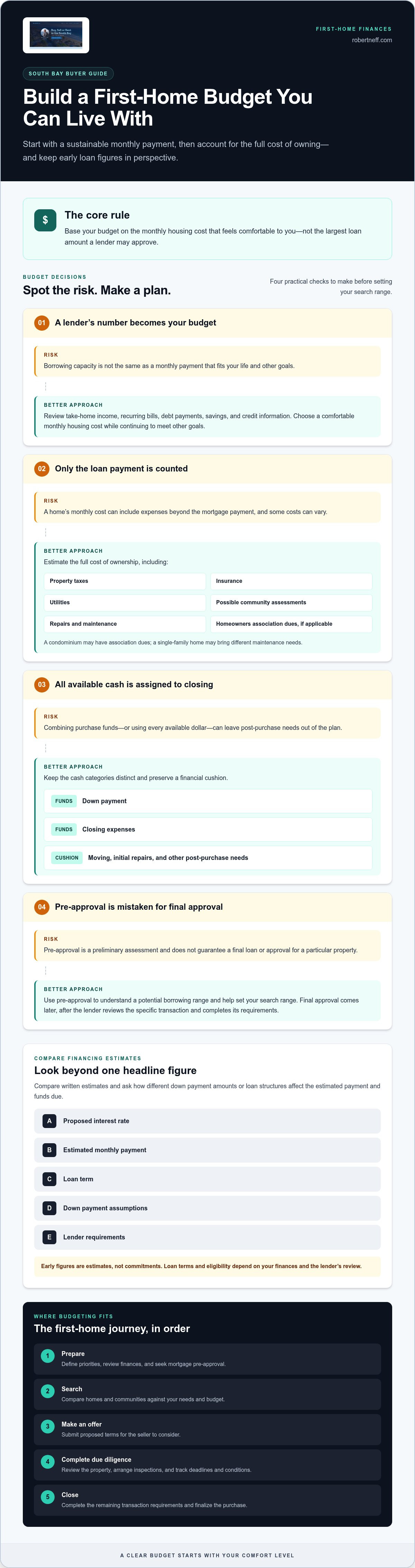
A financially sound purchase starts with the monthly payment you can live with, not the largest loan amount a lender might approve. Compare the full cost of owning the type of home you’re considering in the South Bay. A condominium may have homeowners association dues, while a single-family home may bring different maintenance needs. Property taxes, insurance, utilities, and possible community assessments can also affect monthly expenses.
Use this stage of the steps to buying a home first time to decide what feels sustainable before settling on a price range. Loan terms and eligibility depend on your finances and the lender’s review, so treat early figures as estimates rather than commitments.
Set a realistic budget and review your finances
Start with a clear picture of your household finances. Review take-home income, recurring bills, debt payments, savings, and credit information. Estimate what you could comfortably spend on housing each month while continuing to meet other goals. Leave room for expenses that can vary, such as utilities, repairs, or changes in insurance and taxes.
Plan for upfront funds separately. Your down payment is one part of the purchase funds, and closing expenses are another. Keep these categories distinct as you estimate how much cash you’ll need. It’s also prudent to preserve a financial cushion for moving, initial repairs, and other post-purchase needs rather than using every available dollar at closing.
Relocating to a new community can change more than housing costs. Transportation, household services, and everyday spending all shape the overall budget. For a broader look at relocation expenses, use this El Segundo cost-of-living analysis alongside your own spending estimates.
Compare financing options and seek pre-approval
Pre-approval is an early assessment of your financial information by a lender. It can help you understand a potential borrowing range, but it doesn’t guarantee a final loan or approval for a particular property. Final terms depend on the lender’s review and the transaction details.
Compare written estimates rather than focusing on one headline figure. Review the proposed interest rate, monthly payment, loan term, down payment assumptions, and lender requirements. Ask how different down payment amounts or loan structures would affect the estimated payment and funds due. Federal information from HUD Resources for Homebuyers can help you learn about loan types and homebuyer programs.
Assistance programs may have specific eligibility rules, application periods, and terms that can change. Verify current details directly with the program administrator before including assistance in your purchase plan. Robert Neff’s South Bay first-time buyer guidance can help connect your budget and priorities to a focused home search, while financing decisions remain with your lender.
How to Compare First Homes and South Bay Communities
A useful home search compares more than asking price and square footage. South Bay communities offer different settings and daily routines, so assess how a property works for you rather than relying on a general ranking of cities. Manhattan Beach, Hermosa Beach, Redondo Beach, El Segundo, Palos Verdes, and Torrance can all be part of a thoughtful search, depending on your priorities.
Turn your priorities into a brief you can use after each tour. Keep essential requirements visible, but stay open to trade-offs you hadn’t considered. This makes the steps to buying a home first time more deliberate: you can measure each property against the same practical questions.
Turn your priorities into a useful home-search brief
Separate non-negotiables from flexible preferences. Note accessibility needs, preferred property type, location priorities, and the places you visit regularly. Consider commute patterns at the times you’d actually travel, along with routes to work, school, errands, or recreation. A neighborhood that looks appealing on a map may feel different when you test those routines.
After each tour, record what you liked, what gave you pause, and which compromise you could accept. If a smaller layout makes a shorter commute possible, decide whether that trade-off suits your household. Revisit your brief as you learn, but make changes intentionally rather than simply chasing the newest listing.
Compare South Bay homes beyond the listing photos
Photos can introduce a home, but they can’t show how comfortably you’ll use it every day. Look at room flow, storage, natural light, and whether the layout supports your routines. Note visible condition and questions to follow up on. A home near the coast may also prompt questions about the property’s exposure, upkeep, and location-specific details described in its disclosures. Treat these as topics to investigate, not assumptions about the home’s condition.
Use a simple comparison table to keep observations consistent:
| Factor | What to compare |
|---|---|
| Location | Community setting, nearby destinations, and the routes you’ll use |
| Layout | Room flow, usable space, storage, and accessibility |
| Condition | Visible upkeep and questions for disclosures, inspections, or document review |
| Commute | Travel routes and typical timing for regular trips |
| Daily life | How well the home and neighborhood support your routines and priorities |
Listings are a starting point, not a complete assessment. Inspections and document review provide additional information to weigh before making a decision. As you compare South Bay coastal homes, use the same criteria for each property and note questions about condition, location, and ongoing costs. Consistent notes also give your buyer representative a clearer picture of what to look for as the search develops.
From Offer to Closing: First-Time Buyer Steps in California
An accepted offer is a major milestone, but it starts a new set of decisions and deadlines. The remaining steps to buying a home first time involve reviewing the agreement, learning more about the property, completing lender requirements, and coordinating closing. The schedule and obligations depend on the contract and transaction, so keep a copy of your agreement and track its dates carefully.
Make an offer and understand the agreement
An offer sets out more than the proposed price. It also describes terms, any contingencies, and deadlines that shape what happens next. A contingency is a condition in the agreement that gives the parties a defined way to respond if a specified matter is not resolved as expected. The contract explains how each condition works and when its deadlines fall. Review the terms with your real estate professional, and seek legal advice from an attorney if you need it.
Negotiation outcomes depend on the property, the seller’s position, and the circumstances of the transaction. Robert Neff’s South Bay buyer representation includes negotiation strategy to help shape an offer around local market conditions and your priorities.
Complete due diligence and prepare to close
Once the agreement is in place, use a written checklist to keep parallel tasks organized. Dates matter, so confirm responsibilities and next steps with the professionals involved in the transaction.
- Arrange an inspection: Review the property’s condition and note questions or concerns that may need follow-up.
- Read disclosures and documents: Review the seller-provided disclosures and other transaction documents promptly, and ask the appropriate professional to explain items you don’t understand.
- Plan for insurance: Explore coverage for the property so you can understand your options and address any requirements connected to the purchase.
- Complete lender requirements: Respond to requests for financial documents and follow the lender’s process for appraisal and remaining loan conditions.
- Coordinate closing: Track outstanding items, review the final documents carefully before signing, and complete the steps required to close.
An inspection provides information about observable property condition, but it doesn’t replace reviewing disclosures, title materials, association documents, or other records relevant to the purchase. Each source answers different questions, so consider them together rather than treating one review as a substitute for another. For a condominium, for example, association documents may provide information about the HOA’s finances, rules, or planned assessments.
Stay in communication with your agent, lender, escrow professionals, and other transaction participants as deadlines approach. If you’re preparing an offer on a South Bay home, work with Robert Neff on your buyer search and offer strategy.
Plan Your First South Bay Home Purchase with Local Buyer Guidance
A first-home search is easier to manage when each decision connects to priorities you’ve already identified. Your preferred communities, property type, financial comfort, and timing can shape which homes are worth exploring and what questions to ask as you compare them. That focus turns the steps to buying a home first time into a practical plan built around your needs.
South Bay conditions can vary by community and property. A search in Redondo Beach may call for different comparisons than one in El Segundo, Torrance, Hermosa Beach, Manhattan Beach, or Palos Verdes. Local market analysis can add context as you consider listings and prepare to make decisions, while your own assessment determines how a home fits your life.
What local buyer representation can help coordinate
Robert Neff, Ph.D., is a licensed California Realtor® who provides first-time buyer guidance, buyer search and negotiation, and professional market analysis. He can use your stated priorities to shape a focused search, help you compare relevant properties, and discuss local market context as you evaluate options. Buyer representation can connect property tours and offer preparation with negotiation and the next transaction stages.
The goal is to make the process understandable at each decision point. Revisit what matters, identify questions about a property, and consider how the available information affects your plans. This is especially useful when a home’s appeal, condition, location, and transaction terms all need to be weighed together. Robert’s South Bay specialization provides local perspective as you move from exploring possibilities toward a considered purchase decision.
Take the next step when you are ready
You don’t need to have every preference settled before beginning a conversation. Share your likely timeline, the South Bay communities you’re considering, and the requirements that matter most. Include what you’re flexible about, too. That gives the discussion a practical foundation, whether you’re preparing to search soon or still deciding what kind of home may suit you.
There’s no need to rush into an offer simply because you’ve started exploring. A thoughtful discussion can help clarify your priorities, outline a suitable search approach, and identify questions to address as you prepare. It can support informed decisions at a pace that fits your plans.
Ready to discuss a South Bay purchase? Connect with Robert Neff to share your timeline, preferred communities, and first-home priorities.
Move Forward with a Plan That Fits You
Your first home purchase doesn’t need to follow someone else’s timeline. Turn what you’ve learned into a plan grounded in your circumstances: what you’re ready to do now, what still needs thought, and which South Bay possibilities deserve a closer look. A clear sense of direction can make each decision more manageable without forcing you to rush.
The steps to buying a home first time are most useful when they help you make choices that fit your life, not simply move you through a transaction. Keep asking whether a home and its community support your priorities, and give yourself room to make informed decisions as new details emerge.
If you’re ready to explore a thoughtful next step, start a conversation about your South Bay home purchase. A grounded plan can help you move toward your first home with greater confidence.
Frequently Asked Questions
Is a first-time home buyer program available in California?
Yes, California has homebuyer assistance programs, though eligibility and application timing vary. CalHFA’s MyHome program offers a deferred-payment loan that may help eligible buyers with down payment and closing costs. The 2026 California Dream for All application window ran from February 24 to March 16 as a lottery, and no new window has been announced. Review current program terms and eligibility before including assistance in your South Bay purchase plan.
How much money should a first-time home buyer save before buying?
There’s no single savings target; it depends on the home, loan, and your financial cushion. The steps to buying a home first time include planning separately for a down payment, closing costs, and funds left after closing. In the South Bay, closing costs are estimated at 2% to 5% of the purchase price. Down payments can vary, so discuss your situation with a lender.
What credit score do you need to buy your first home?
There isn’t one score that applies to every loan. Lenders assess credit alongside income, existing debt, savings, and other details, and loan programs can have different requirements. A lower score may affect the financing options or terms available to you, but only a lender can assess your application. Before house hunting, review your credit reports for errors and ask a lender how your credit profile affects the options under consideration.
Can I buy a home if I have student loan debt?
Yes, student loan debt doesn’t automatically prevent you from buying a home. A lender will consider your required loan payments along with income, other debts, and the proposed housing cost when assessing your application. For example, a borrower with steady income and manageable monthly obligations may be assessed differently from someone with the same loan balance but a larger payment burden. Include the actual repayment amount in your budget and discuss how it affects qualification.
Can a first-time home buyer use gift money for a down payment?
Gift funds may be usable for a down payment, depending on the mortgage program and lender requirements. Before relying on a gift, tell the lender where the funds will come from and ask what documentation is needed. The lender may require a written gift statement and records showing the transfer. Avoid moving money between accounts without keeping a clear record, since the lender may ask you to document deposits during loan review.
What happens if an inspection finds problems after my offer is accepted?
Inspection findings give you information to consider, but they don’t automatically determine what happens next. Review the report, identify which issues need further evaluation, and discuss your options with your real estate professional in light of the contract’s terms and deadlines. Depending on the agreement and negotiation, you may seek clarification, discuss a possible response with the seller, or proceed. Don’t assume the seller must make repairs; contract terms and circumstances matter.


