

What if the right first home in Manhattan Beach isn’t the one closest to the sand, but the one that best fits your daily life and financial comfort? Manhattan Beach real estate for first-time buyers can feel daunting when neighborhood character, home condition, and total ownership costs all shape what a budget can realistically buy. A clear plan can turn a broad search into informed choices.
This guide shows you how to build that plan. Compare areas such as the Sand, Tree, Hill, and East Manhattan sections against your routines, set a practical budget that includes property-specific costs, and evaluate homes beyond their asking prices. You’ll also find a step-by-step overview of the purchase process, from preparing an offer to reviewing a property.
Robert Neff, Ph.D., Realtor®, brings local market analysis, buyer search, and negotiation support to the process. The aim is to help you understand the trade-offs, ask informed questions, and make decisions at a pace that works for you.
Key Takeaways
- Define what “practical” means for your first home by weighing location, condition, budget, and the routines you want your home to support.
- Build a personal ownership budget alongside lender preapproval, including upfront expenses, ongoing costs, and funds to keep in reserve.
- Use a consistent comparison framework to assess Manhattan Beach real estate for first-time buyers, focusing on the property features and trade-offs that matter most to you.
- Understand who handles each stage of the purchase, from financing and offer decisions to property review and closing, so you can keep the process organized.
- See how tailored search criteria, local market analysis, and buyer guidance can help structure your search and negotiation decisions.
Is Manhattan Beach Real Estate a Practical First Home? Start With Your Priorities
A coastal market can feel daunting for a first purchase, especially when a home’s location, condition, and ongoing costs all affect the decision. The practical question isn’t simply whether Manhattan Beach is affordable in general. It’s whether a particular property fits your budget, daily routines, and plans for the years ahead.
Assess each property on its own. Homes can differ in size, layout, upkeep, parking, outdoor space, and recurring obligations, even within the same broad area. Citywide prices and general impressions provide context, but they can’t determine whether a specific home works for you. For background on the city’s geography and local context, consult the Manhattan Beach, California Wikipedia page.
What should first-time buyers clarify before searching?
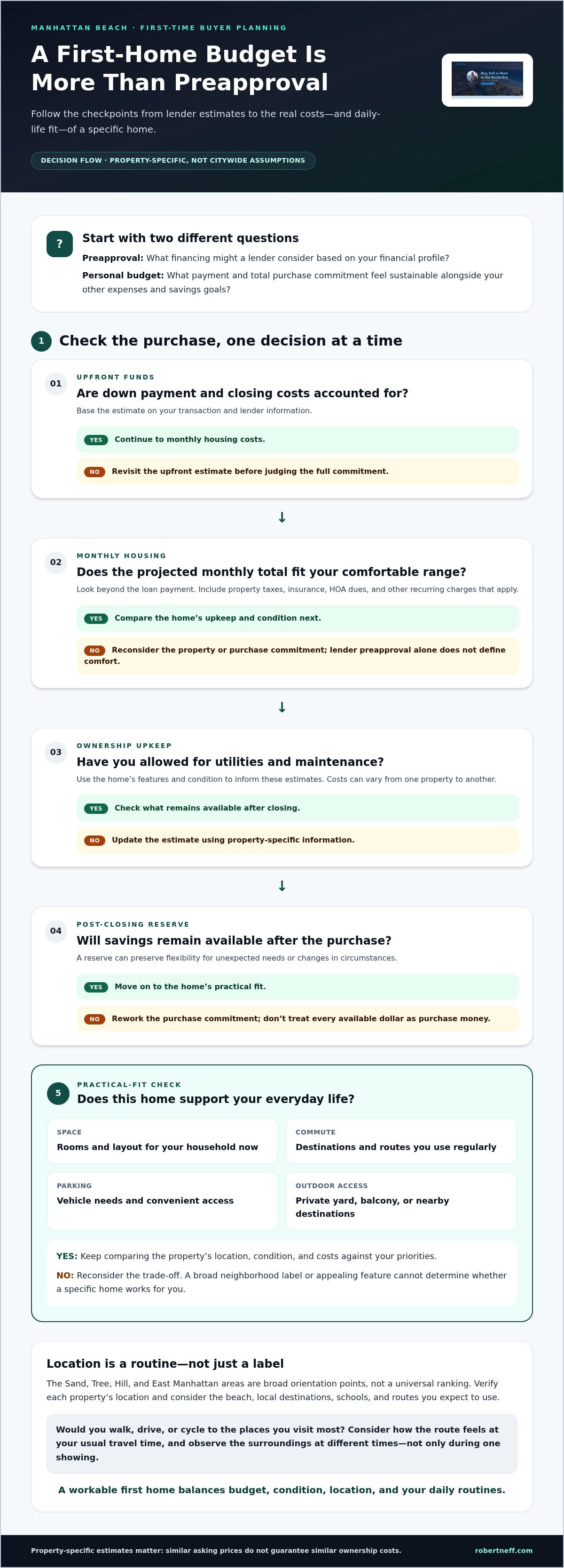
Separate essentials from preferences before viewing homes. A short written list makes it easier to assess listings consistently and avoid letting an appealing feature distract from a practical need. Consider:
- Space: How many rooms and what kind of layout support your household now?
- Commute: Which destinations and major routes will you use regularly?
- Parking: How many vehicles need space, and how important is convenient access?
- Outdoor access: Do you need a private yard, a balcony, or nearby outdoor destinations?
Discuss financing with a qualified lender and set a comfortable monthly housing range. Preapproval indicates what a lender may be willing to lend; it doesn’t establish what you’ll feel comfortable paying after accounting for other expenses and savings goals. Consider how long you expect to stay, too. A layout that suits one person today may feel different if household or work needs change.
How do Manhattan Beach areas shape everyday life?
The Sand, Tree, Hill, and East Manhattan areas are broad orientation points, not a universal ranking of where to buy. Labels can help organize a search, but boundaries and descriptions may vary. Verify each property’s location and compare it with the beach, local destinations, schools, and routes you expect to use. Don’t assume one area fits every buyer.
Translate those comparisons into real routines. Would you walk, drive, or cycle to the places you visit most? How does the route feel at the time you’d usually travel? A visit during one showing may not reveal the full pattern of street activity or parking demand. Return at different times, observe the surroundings, and consider how the location works on an ordinary weekday as well as a day off.
For Manhattan Beach real estate for first-time buyers, the strongest starting point is a search framework, not a fixed neighborhood preference. Match your must-haves and comfortable budget to each home’s condition and location, then assess the trade-offs in person. This helps focus your comparisons and clarify which compromises you’re willing to make.
Prepare Your First-Time Buyer Budget for Manhattan Beach Homeownership
A lender’s preapproval and your personal budget answer different questions. Preapproval estimates the financing a lender may consider based on your financial profile. Your budget sets a monthly payment and total purchase commitment that leave room for other priorities. For Manhattan Beach real estate for first-time buyers, both matter: one informs your purchasing range, while the other helps you judge whether a home is financially sustainable.
What belongs in a first-home affordability plan?
Look beyond the down payment. Estimate closing costs and recurring expenses, then compare those figures with the lender’s estimates. Depending on the property, ongoing costs can include property taxes, insurance, utilities, maintenance, HOA dues, and applicable assessments. These costs vary by home, so use current property-specific information rather than assuming that two homes with similar prices will have similar carrying costs.
Organize your review into four parts:
- Upfront funds: Down payment and closing costs, based on your transaction and lender estimates.
- Monthly housing: The projected loan payment alongside taxes, insurance, HOA dues, and other recurring charges that apply.
- Ownership upkeep: A realistic allowance for utilities and maintenance, informed by the home’s features and condition.
- Post-closing reserve: Savings to keep available after the purchase for unexpected needs or changes in your circumstances.
Don’t treat every available dollar as purchase money. Keeping a reserve can protect your flexibility after moving in, when the home’s actual upkeep and household expenses become clearer. For broader regional context on planning household expenses, the El Segundo cost-of-living analysis offers a South Bay perspective. Your estimates should still reflect the specific property and your lifestyle.
How can buyers prepare for financing conversations?
Before requesting preapproval, gather clear records of income, assets, debts, and credit. Organized documentation can help a lender assess your finances and explain the information behind a preapproval. Ask a qualified mortgage professional to compare loan terms and explain how each option affects your payment, cash needed at closing, and longer-term plans. No single loan structure or assistance program suits every buyer.
Research assistance programs carefully. Eligibility rules, application windows, and loan limits can change, so review current program information before including potential support in an offer strategy. The U.S. Department of Housing and Urban Development first-time buyer guide provides general homebuying information, including guidance on affordability, loan shopping, and programs.
Robert Neff’s market analysis and step-by-step buyer guidance can help connect your financial framework to a focused property search. This guidance complements, rather than replaces, lender advice. Once you’ve outlined your comfort range and key questions, explore buyer guidance with Robert Neff as you prepare to assess homes and their costs.
Compare Manhattan Beach Homes by Neighborhood, Condition, and Coastal Trade-Offs
Two homes in the same broad area can offer very different daily experiences and ownership responsibilities. Compare each property using listing details, visits, disclosures, and professional inspections rather than relying on a neighborhood label alone. For Manhattan Beach real estate for first-time buyers, a consistent comparison makes trade-offs easier to see without assuming one area or property type is best for everyone.
What trade-offs differ across Manhattan Beach areas?
Use the Sand, Tree, Hill, and East Manhattan areas as broad orientation points, then assess the specific address. Consider its proximity to the beach, local destinations, schools, and routes you expect to use. Property types and street-level conditions can vary within an area, so ground your comparison in current listings and firsthand visits. Broader coastal-market context is available in this South Bay coastal homes buyer reference.
Visit at times that reflect your routine. A street may feel different during a commute, after school, or on a busy beach day. Observe traffic and parking, and consider whether routes to places you use often feel workable. These details can show how well a home’s location supports your everyday priorities.
Which property details deserve careful review?
Use a comparison table to track what you know and what needs further review. Complete one for each property, keeping documented facts separate from impressions formed during a visit.
| Comparison factor | What to assess |
|---|---|
| Location | Beach access, nearby destinations, schools, routes, and street-level conditions. |
| Property type | How the home’s configuration and shared or private spaces fit your needs. |
| Condition | Age, visible wear, disclosures, permits, and findings from appropriate inspections. |
| Outdoor space | Whether the available yard, patio, balcony, or other outdoor area suits your use. |
| Parking | Available spaces, access, and fit with your household’s daily requirements. |
| Recurring obligations | Property-specific taxes, insurance, maintenance, HOA dues, and applicable assessments. |
Coastal proximity can make maintenance and insurance questions especially relevant to an individual property, but it doesn’t tell you by itself what a home will require or cost to own. Review disclosures and inspection findings with the appropriate professionals. For each address, establish relevant insurance details, maintenance considerations, HOA obligations, and any assessments using current property-specific information. A general neighborhood impression is no substitute for that review.
Finally, weigh each finding against your priorities. A convenient location may come with compromises in outdoor space or parking; another home may better suit your layout needs while changing your usual routes. A side-by-side record makes these choices clearer and helps you identify which trade-offs you’re comfortable accepting.
Follow a Clear First-Time Homebuying Process in Manhattan Beach
A clear sequence helps turn a promising listing into a considered purchase. Each professional has a distinct role, but you remain responsible for choosing a home, deciding on offer terms, and reviewing the commitments in the contract. For Manhattan Beach real estate for first-time buyers, keeping decisions and deadlines organized can make a complex transaction easier to follow.
- Prepare financially. Discuss financing with a qualified lender, understand the documents and terms involved, and set a comfortable offer ceiling based on your own budget.
- Search with defined priorities. Compare properties against your needs for location, layout, condition, and ongoing obligations. A buyer’s representative can help focus the search and provide local market analysis.
- Evaluate the offer. Review relevant comparable property information, the home’s known condition, and your financing readiness before deciding whether and how to make an offer.
- Complete due diligence. Review disclosures and inspection findings, follow up on property questions, and keep financing and appraisal milestones in view.
- Prepare for closing. Track required documents, review final figures, and coordinate remaining steps with the appropriate professionals before signing or funding.
What should buyers do before making an offer?
Preparation matters. Revisit your search priorities and confirm that the property’s location, features, and known obligations fit your plan. Set a maximum offer that feels manageable, not simply the highest amount a lender may approve. Your buyer’s representative can help examine comparable property information and consider negotiation choices. For added context on representation and negotiation, see this guide to South Bay buyer representation and strategy.
Before signing, discuss the proposed terms, contingencies, and deadlines with your buyer’s representative. Contingencies can relate to matters such as financing, appraisal, or property review, but their use and timing depend on the specific offer and transaction. Read the contract carefully and raise questions before agreeing to its terms. You decide whether to proceed; the agent provides representation and negotiation support, while the lender addresses financing.
How should first-time buyers approach due diligence and closing?
Once the transaction is underway, use the contract’s dates as your working schedule. Inspection and disclosure reviews, financing, appraisal, and escrow each involve separate tasks. An inspector evaluates property condition within the inspection’s scope. Escrow and title professionals coordinate transaction and title matters, while your lender handles loan requirements. Direct technical questions to the appropriate qualified professional and raise them promptly so you understand your options within the transaction timeline.
As closing approaches, review the final figures and required documents closely. Confirm that the paperwork reflects the terms you agreed to and that you understand what must be completed before signing or funding. Robert Neff provides buyer search, negotiation, and step-by-step guidance through the purchase process. Work with Robert Neff on your Manhattan Beach home search for local market analysis and structured support as you move forward.
Work With Robert Neff to Navigate a First Manhattan Beach Purchase
A focused search starts with understanding what matters to you, not simply collecting listings. Robert Neff, Ph.D., Realtor®, represents buyers in Manhattan Beach and the wider South Bay. He offers first-time buyers guidance as they turn their priorities into a workable search. Tailored criteria can narrow the search to properties that align with your financial parameters, preferred location, timing, and practical needs.
What does tailored buyer representation look like?
The first step is listening. A clear picture of your budget, priorities, and timing helps shape search criteria around your circumstances rather than a generic checklist. Criteria can distinguish firm requirements from preferences, leaving room to adjust as you learn more about available homes and their trade-offs.
Local market analysis adds context to property comparisons and offer decisions. A listing’s asking price is only one part of the evaluation. Location, condition, features, and relevant comparable property information can all inform how a home fits your plans and how to approach an offer. Robert provides buyer search and negotiation support, helping you consider the available information while leaving the decisions in your hands.
Guidance continues through the purchase process. Robert can help organize next steps, explain how search and negotiation decisions connect, and support communication as the transaction progresses. This structure can be useful when a disclosure raises questions, an offer needs careful consideration, or several properties involve different compromises. For technical matters, buyers rely on the appropriate lender, inspector, escrow or title professional, or other qualified expert.
How can a first-time buyer get started?
You don’t need to arrive with every detail settled. A short preparation list can make an initial conversation more productive and help define a sensible starting point:
- Priorities: Note preferred areas, property features, and daily needs you want the home to support.
- Financing milestones: Identify what you’ve discussed with a lender and what questions remain.
- Timing: Share your preferred pace and any factors affecting when you hope to buy.
- Open questions: Record concerns about property comparisons, offers, or the purchase process.
Then discuss how you want to approach Manhattan Beach real estate for first-time buyers. You might begin with a wider search and refine it as you view homes, or focus early on a narrower set of location and property criteria. The right pace depends on your readiness and priorities. Clear communication helps keep the search purposeful without pushing you to decide before you’re comfortable.
If you’re considering a first purchase, connect with Robert Neff to discuss your goals, search criteria, and a practical next step. A focused conversation can bring structure to the decisions ahead while leaving you in control of your choices.
Make Your First Move With a Clear Plan
Your first search criteria don’t have to be permanent. As you learn from each property, refine what matters most and adjust your approach without losing sight of your financial comfort and longer-term plans. That flexibility can make Manhattan Beach real estate for first-time buyers feel more manageable, even when the right choice takes time to become clear.
Robert Neff, Ph.D., Realtor®, is a California real estate licensee, DRE #02442812. He supports buyers with tailored search, market analysis, negotiation, and first-time buyer guidance. A grounded conversation can help turn broad questions into a practical next step, whether you’re preparing to search or weighing a particular home.
Discuss your Manhattan Beach home search with Robert Neff and share what you hope your first home will make possible. Move forward thoughtfully with a plan shaped around your goals.
Frequently Asked Questions
Is Manhattan Beach realistic for a first-time home buyer?
It can be realistic for some buyers, but the answer depends on financing, available funds, and the properties that fit their needs. Start with a lender’s assessment and your own comfortable monthly budget, then compare actual homes rather than relying on a citywide impression. If your priorities allow a wider search, consider nearby South Bay communities such as Redondo Beach, Hermosa Beach, El Segundo, Palos Verdes, or Torrance as well.
How much do first-time buyers need to buy a home in Manhattan Beach?
There isn’t one amount that applies to every buyer or property. Your upfront funds depend on the purchase price, loan terms, down payment, and transaction costs; your ongoing budget should also account for taxes, insurance, utilities, maintenance, and any HOA dues or assessments. Ask a lender to estimate cash needed to close, then preserve a reserve instead of committing all available savings to the purchase.
Can first-time buyers use down payment assistance in Manhattan Beach?
Possibly, if they meet a program’s current eligibility rules. Options described in the research include Los Angeles County’s Home Ownership Program for qualifying low-income first-time buyers and CalHFA’s MyHome Assistance Program. Program availability, income requirements, and application details can change, so verify current terms directly through the administering agency and review them with your mortgage professional. Don’t include assistance in your purchase plan until eligibility and timing are clear.
What should first-time buyers inspect before buying a Manhattan Beach home?
Have an appropriate inspector assess the home’s major systems and visible condition, including the roof, plumbing, electrical components, drainage, and signs of moisture. Review seller disclosures and available permit records, and follow up on anything that needs specialist evaluation. For a coastal property, consider maintenance and insurance questions specific to the property rather than assuming proximity to the water means a particular condition or risk.
Which Manhattan Beach neighborhood is best for first-time buyers?
No single area is best for every buyer. Treat the Sand, Tree, Hill, and East Manhattan areas as broad search references, then compare individual streets and homes against your routines, budget, and preferred property features. Visit at different times and verify each listing’s location details. The best fit is the one whose everyday trade-offs make sense for you, not simply the area with the strongest general reputation.
Do first-time buyers need a real estate agent in Manhattan Beach?
Buyers can choose whether to work with an agent, but representation can help organize a search, interpret local market information, and evaluate offer and negotiation decisions. A buyer’s representative can also help coordinate questions during the transaction while directing technical matters to the relevant professional. Robert Neff provides buyer search, negotiation, and first-time buyer guidance for Manhattan Beach and the wider South Bay.
What happens if a home inspection reveals problems?
An inspection finding doesn’t automatically decide whether you should proceed. First, clarify the issue and its significance with the inspector or an appropriate specialist. Then review the purchase contract with your representative to understand available choices and deadlines. Depending on the findings and contract terms, you may consider proceeding, discussing a negotiated response, or using a contractual option if one applies. Keep decisions grounded in documented information and your comfort level.


