

A property marketed for horses may still be the wrong place to keep them. When searching Palos Verdes equestrian properties for sale, a barn or generous acreage may catch your eye, but neither confirms that horsekeeping is permitted or that the land and access suit your plans. Before investing time in a tour or considering an offer, focus on verified suitability for your intended use, not the listing label alone.
This guide explains which features to assess, how to compare Palos Verdes locations, and what to verify before making an offer. Usable land, facilities, and access all deserve close attention, and rules vary between communities such as Rolling Hills Estates, Rancho Palos Verdes, and Rolling Hills. We’ll also cover what to check with the relevant jurisdiction and qualified professionals, including zoning, recorded restrictions, and site conditions. A careful review can help you decide whether a promising listing fits your plans, or identify early when it does not.
Key Takeaways
- Assess horse-use suitability against your intended needs and verified property features, not acreage or listing language alone.
- Compare Palos Verdes equestrian properties for sale in Rancho Palos Verdes, Rolling Hills, Rolling Hills Estates, and Palos Verdes Estates against your priorities.
- Before making an offer, confirm the jurisdiction, review relevant records, inspect site conditions, and verify horsekeeping rules with the appropriate authorities.
- Use a consistent scorecard to weigh essential features and trade-offs, then compare listing claims with disclosures, records, and professional findings.
- Build your purchase strategy in stages: define your intended use, compare locations, verify suitability, and evaluate offer terms with informed buyer guidance.
Why Palos Verdes Equestrian Properties for Sale Suit You
The right property depends on how you plan to use it, not how a listing describes it. The Palos Verdes Peninsula includes distinct communities and landscapes, so define your priorities before comparing homes. Do you want to keep horses onsite, ride nearby while boarding elsewhere, or simply have room for equestrian equipment? Each goal calls for a different search.
Advertised equestrian appeal describes how a property is presented; verified suitability means its features, access, and permitted uses have been checked against your specific plans. A large parcel may have little usable space, while a smaller property may better meet your needs if its layout and verified features are a closer fit.
Which property features matter for your intended horse use?
Assess the site as it exists, not just its total acreage. Consider usable outdoor space, how horses or equipment would reach the property, fencing, and any existing stable or corral. Then find out whether each facility is permitted, functional, and appropriate for your intended use. The presence of a structure alone does not establish that it can serve your plans.
Separate must-haves from features that need further review. An existing facility might be essential if you plan to keep horses onsite; a proposed change to the layout may need professional assessment before you rely on it. If nearby riding is your priority, investigate access separately rather than assuming it comes with the property. Keep a list of open questions to check against relevant records, with the local jurisdiction, or with qualified professionals.
What does an “equestrian” listing label actually tell you?
A search tag or listing description can help you find candidates, but it does not prove horsekeeping is allowed or that the facilities suit your plans. Treat the label as a prompt to ask questions, not as a conclusion. Before arranging a visit, ask the listing representative what horse-related use is currently reported, which facilities are included, and what information supports those statements.
- Which features are already on the property, and which are proposed or described as potential?
- Is there documentation about horsekeeping, permits, access, easements, or recorded restrictions?
- What remains unverified and should be confirmed with the relevant jurisdiction or a qualified professional?
Record each answer and distinguish confirmed facts from seller or listing claims. This gives your search for Palos Verdes equestrian properties for sale a practical foundation: compare properties against your intended use, then verify the details that could determine whether a property works for you.
Compare Equestrian Property Options in Rancho Palos Verdes and Nearby Palos Verdes Communities
Compare locations using the same questions: Does the property fit your intended use? What would daily access and routines look like? Does the location work for your commute and household? A community name can help organize a search, but it does not establish that a specific parcel allows horsekeeping or has usable facilities. Listings and property details change, so verify both before drawing conclusions about Palos Verdes equestrian properties for sale.
| Community | What to know | What to verify |
|---|---|---|
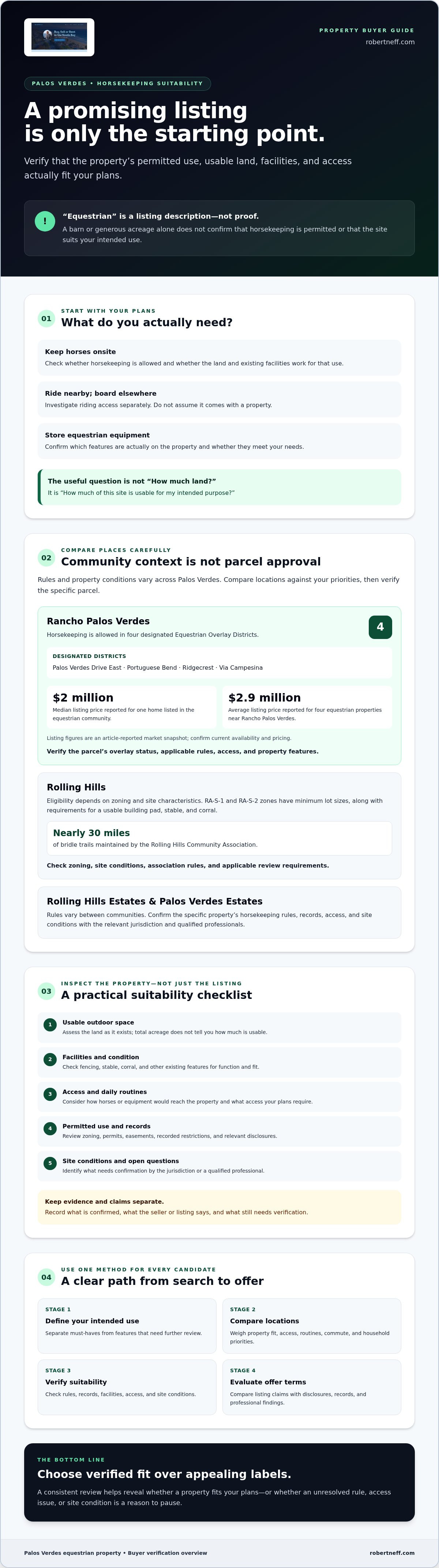
| Rancho Palos Verdes | Horsekeeping is allowed in four designated Equestrian Overlay Districts: Palos Verdes Drive East, Portuguese Bend, Ridgecrest, and Via Campesina. As of October 2026, one home is listed for sale in the equestrian community, with a median listing price of $2 million. Four equestrian properties near Rancho Palos Verdes are listed, averaging $2.9 million. | Confirm the parcel’s overlay status, applicable rules, current availability, access, and property features. The city provides information on horsekeeping suitability regulations. |
| Rolling Hills | Property eligibility depends on zoning and site characteristics. RA-S-1 and RA-S-2 zones have minimum lot sizes, along with requirements for a usable building pad, stable, and corral. The Rolling Hills Community Association maintains nearly 30 miles of bridle trails. | Check the parcel’s zoning, site conditions, association rules, and any applicable review requirements. Confirm trail access for the specific property rather than assuming that proximity means access. |
| Rolling Hills Estates | Horsekeeping is permitted in the Horse Overlay zone, subject to area requirements. City rules include limits on the number of horses and specified space and setback requirements. The community maintains more than 20 miles of bridle trails. | Verify the property’s overlay status, applicable standards, and whether a riding route is accessible from the parcel. |
| Palos Verdes Estates | Available information does not establish equestrian inventory or horsekeeping eligibility for a specific property here. | Confirm current listings, land-use rules, access, and any property-specific restrictions with the appropriate sources. |
Which location factors affect day-to-day horsekeeping?
Think beyond the map. Consider how residents, visitors, and relevant service providers would reach the property, and whether its layout supports your planned routines. If nearby riding matters, verify routes, easements, and trail access independently. Broader South Bay coastal home-buying context can help frame a regional search, while reviewing each property individually keeps the decision grounded in confirmed details.
How should buyers compare the communities?
Use the same framework for every candidate: intended use, property fit, commute, daily routine, and verified access. A buyer consultation can help turn those priorities into clear search criteria before you tour. Robert Neff’s buyer search, market analysis, and negotiation services support a step-by-step purchase process.
How to Verify Horsekeeping Suitability Before Buying a Palos Verdes Property
A listing may point to a promising candidate, but it cannot establish whether your planned horse use is allowed or practical. Listing language does not establish legal permission for a use. For any property among Palos Verdes equestrian properties for sale, follow an orderly review and keep documentation of what you confirm.
- Define your intended use. Specify whether you plan to keep horses onsite, use existing facilities, or need space for related equipment. Be clear about the number of horses and the facilities you expect to use so your questions to officials and professionals are specific.
- Identify the property’s jurisdiction. Confirm which city or county governs the parcel before relying on rules you’ve heard about a neighboring community. Requirements can vary by location and property designation.
- Review applicable rules and records. Ask the relevant local planning or land-use authority about horsekeeping, zoning, and requirements for structures or proposed uses. In Rancho Palos Verdes, consult the city’s Rancho Palos Verdes Equestrian Zoning information and confirm how it applies to the parcel. Have qualified professionals review title materials, easements, recorded restrictions, and available structure records.
- Inspect the site and facilities. Look at access, fencing, drainage, usable areas, and existing structures. Note visible concerns, but do not assume that a feature is permitted, functional, or suitable for your plans just because it is present.
- Confirm before proceeding. Resolve open questions with the appropriate authority or professional, and keep written findings where available. Review purchase contingencies with the appropriate real estate or legal professional before deciding whether to remove them.
Which local rules and property records should buyers check?
Start with the parcel, not a general neighborhood description. Ask the governing jurisdiction which land-use and horsekeeping rules apply and whether the structures or uses you’re considering need further review. Then compare the answers with property documents. Title information, easements, and recorded-use restrictions may affect access or use, so have qualified professionals interpret relevant records rather than relying on a listing summary.
What should a property visit and professional review assess?
Walk the property with your intended routine in mind. Is access practical for residents and visitors? Are fencing, drainage, and structures in observable condition? Which areas appear usable, and what needs further assessment? A site visit is an initial check, not a substitute for specialist review. Ask appropriate inspectors or other qualified professionals to assess issues beyond your expertise, including property conditions or structures that raise questions.
Keep a written list of unresolved items, who will verify each one, and what documentation is needed. If a rule, access right, or facility status is unclear, treat it as unconfirmed rather than assuming it will work out. A disciplined review helps you decide whether to proceed, seek more information, or reconsider the property before your purchase protections change.
How to Evaluate Palos Verdes Equestrian Listings and Prepare a Strong Offer
A consistent review helps you compare listings based on evidence, not enthusiasm. For each candidate among Palos Verdes equestrian properties for sale, create a scorecard with three categories: essential for your intended use, desirable but negotiable, and not yet verified. You can then distinguish a promising home that still needs investigation from one whose marketing description is being mistaken for confirmation.
- Must-haves: List the horse-use features you need, such as usable space, practical access, or existing facilities.
- Trade-offs: Note what you could accept, such as a different layout or a facility that needs further professional assessment.
- Evidence: Record whether each detail comes from a listing claim, disclosure, public record, inspection, or qualified professional.
How can buyers screen listings before scheduling a showing?
Review parcel information, the listing description, photographs, and available disclosures. Look for gaps as well as appealing features. A photograph may show a barn, but it does not establish the barn’s status or suitability. A description may mention access without documenting an easement. Ask the listing representative which horse-related uses and facilities are reported, what records support those claims, and what remains unverified. Prioritize visits to properties that appear to meet your confirmed essentials and have a realistic path to resolving open questions.
Apply the same scorecard to each candidate. If a listing has an attractive facility but unclear access, mark access as unverified rather than treating it as a strength. Consistent comparisons help focus professional review where it matters. For buyers who are also exploring ranches and equestrian acreage in other regions, specialized platforms like Colorado Horse Property provide a helpful reference for how dedicated horse setups and pasture amenities are evaluated.
What should an equestrian-property offer account for?
Build your offer strategy around comparable market evidence, the property’s condition, and your verified priorities. A feature you cannot use as intended may not have the value to you that its presentation suggests. A property with fewer existing facilities may still merit consideration if its permitted use and site conditions align with your plans.
Before making an offer, discuss inspection and document-review timing with your buyer’s agent and the relevant professionals. Contingencies and deadlines should reflect your circumstances, the information still needed, and professional advice. Do not assume every concern can be resolved within a standard timeline. Confirm what can be reviewed and when, then make decisions with a clear understanding of your options.
Robert Neff provides buyer search, market analysis, negotiation, and step-by-step guidance across the South Bay, including Palos Verdes. For help shaping a property search and evaluating offer considerations, explore his buyer representation and negotiation guidance.
Find Palos Verdes Equestrian Properties with a Clear Buyer Strategy
A focused search turns a complicated decision into a practical sequence: define your intended use, compare communities, verify each property’s suitability, then assess offer terms. This keeps your search for Palos Verdes equestrian properties for sale grounded in what you can confirm, rather than assumptions based on a listing description or neighborhood name.
What can a buyer consultation clarify?
A buyer consultation can help organize your criteria before you tour. Clarify which communities you prefer, whether you want to keep horses onsite or prioritize nearby riding, and which property features are essential. Identify acceptable compromises, too. For example, you might consider a property without existing facilities if its potential use and site conditions can be reviewed and confirmed.
Once you’ve defined your priorities, focus on current listings that merit closer review. Assess each candidate’s fit and identify questions about land use, structures, access, or recorded restrictions for follow-up with the relevant authorities and professionals. Buyer representation can also support property evaluation and offer negotiation as the purchase progresses, without replacing specialized advice when needed.
How to begin a Palos Verdes property search
Prepare a short working brief before comparing homes. Include your must-have features, preferred communities, intended horse use, and acceptable trade-offs. Make a separate list of unanswered questions, such as whether a particular use is permitted or whether an access route is documented. Keeping confirmed facts separate from assumptions makes it easier to compare properties and choose what to investigate next.
Robert Neff, Ph.D., is a licensed California Realtor® serving buyers across the South Bay, including Palos Verdes. His buyer services include property search, market analysis, negotiation, and step-by-step guidance. He can help you set search criteria and evaluate real estate options. Verify horsekeeping rules and property-specific conditions with the appropriate jurisdiction and qualified professionals.
If you’re comparing buyer representation, consider the questions outlined in a guide to choosing an El Segundo real estate agent, such as how an agent approaches search, evaluation, and negotiation. For a low-pressure first step, bring your preferred communities, essential features, and open questions to a conversation about your South Bay property search. A clear brief gives the process direction, while careful verification helps you decide which property, if any, is right to pursue.
Move Forward with a Clear Property-Buying Plan
The strongest search starts with your intended use, not a listing label. As you compare Palos Verdes equestrian properties for sale, weigh each location against your priorities, then verify horsekeeping rules, access, records, and site conditions for the specific property. A disciplined review separates confirmed facts from claims that still need professional or jurisdictional confirmation.
Once you’ve defined your must-haves and acceptable trade-offs, you can assess suitable listings and consider offer terms more clearly. Robert Neff is a licensed California Realtor® serving Palos Verdes and the wider South Bay. His buyer services include property search, market analysis, negotiation, and step-by-step guidance. Confirm property-specific horsekeeping and site questions with the appropriate authorities and professionals.
To discuss your priorities and a practical next step, discuss your Palos Verdes property search with Robert. A thoughtful plan can help you pursue the right fit with confidence.
Frequently Asked Questions
Can you keep horses on a property in Palos Verdes?
Sometimes, but permission depends on the property’s location, zoning, and applicable rules. In Rancho Palos Verdes, horsekeeping is allowed in four designated Equestrian Overlay Districts. Rolling Hills Estates has a Horse Overlay zone, while Rolling Hills has its own zoning and community association requirements. Do not assume a property qualifies because it is on the Peninsula or has a barn. Confirm the rules for the specific parcel with the relevant jurisdiction.
How do I verify whether horsekeeping is allowed on a Palos Verdes property?
First identify the city or county that governs the parcel, then ask its planning or land-use department about zoning, overlays, and horsekeeping requirements. For Rancho Palos Verdes, check whether the property is in an Equestrian Overlay District. Have qualified professionals review relevant permits, title documents, easements, and recorded restrictions. Listing statements can suggest questions to ask, but they are not proof that a use is permitted.
What should I look for when buying an equestrian property in Rancho Palos Verdes?
Confirm whether the parcel is in one of Rancho Palos Verdes’ designated equestrian districts: Palos Verdes Drive East, Portuguese Bend, Ridgecrest, or Via Campesina. Assess usable areas, access, fencing, and existing structures against your plans, and verify horsekeeping rules with the city. Investigate property-specific restrictions and site conditions as well. If your broader South Bay search includes Redondo Beach, Hermosa Beach, Manhattan Beach, El Segundo, or Torrance, check each property’s rules separately.
Are there equestrian properties for sale in Rolling Hills or Rolling Hills Estates?
Confirm current availability using up-to-date listing information. Even if a property is marketed as equestrian, verify its zoning, permitted use, facilities, and access before relying on the description. Inventory and property details can change, so check a listing’s status before arranging a visit or planning an offer.
How much land do you need for a horse property in Palos Verdes?
There is no single acreage figure for all of Palos Verdes. In Rolling Hills, RA-S-1 has a minimum lot size of one acre and RA-S-2 has a minimum of two acres, alongside requirements for usable areas and facilities. In Rolling Hills Estates, the Horse Overlay has area requirements, including 800 square feet for the first horse and 300 for each additional horse. Verify the applicable standards for the specific parcel.
Does an equestrian property listing guarantee horse facilities or riding access?
No. An equestrian label or search tag is a starting point, not confirmation of facilities, permitted horsekeeping, or riding access. Ask which structures and features are actually present and request supporting information. Verify access rights, easements, restrictions, and nearby riding routes independently. A visible trail or barn does not by itself establish that you can use it as intended or that it meets applicable requirements.
What inspections should I consider before buying a horse property?
Arrange a qualified property inspection, then seek additional professional review for concerns specific to the site or your intended use. During a visit, note access, fencing, drainage, usable areas, and the condition of existing structures; do not assume they meet requirements. Have appropriate professionals review records for easements and restrictions. In Rancho Palos Verdes, include property-specific site conditions in due diligence, since landslide concerns affect some areas but not the entire city.


