

What can you build, remodel, or use on a Palos Verdes property? The answer may depend on more than its zoning label. Palos Verdes land use restrictions vary by city and parcel, while slope, coastal location, and private deed restrictions may add separate review.
Public maps and planning documents are useful starting points, but they may not give you a complete answer. The Palos Verdes Peninsula’s four independent cities have separate rules, and a map is only one part of property due diligence. In Rancho Palos Verdes, for example, designated landslide-area rules can limit new residential construction. In Palos Verdes Estates, some exterior projects may also require review by the Palos Verdes Homes Association’s Art Jury.
This guide explains how to identify the agencies and records relevant to a property, distinguish zoning from permits, hazards, and private restrictions, and verify details before making an offer or planning improvements. Use the parcel-by-parcel steps below to confirm what applies with the appropriate public agencies and qualified professionals.
Key Takeaways
- Confirm which Palos Verdes city governs the parcel; local rules and reviewing agencies differ by jurisdiction.
- Check zoning, overlays, coastal review, permits, and recorded restrictions separately. Each can affect what you may build, remodel, or use.
- Compare your intended plans with documented allowances, and list unverified possibilities as questions rather than assumptions.
- Before making an offer, gather parcel records and ask the responsible planning department for written clarification on material project questions.
- Assess Palos Verdes land use restrictions alongside the property’s existing use, your plans, and unresolved issues. Don’t assume an approval or development outcome.
What Palos Verdes Land Use Restrictions Can Affect a Property?
Land-use restrictions include public rules and recorded obligations that can limit how a property is used or changed. They may determine whether a use is allowed, where a building can sit, or what review is required before an exterior alteration. The applicable rules depend on the parcel. Zoning is one layer, not a complete answer: permits, overlays, hazard-related requirements, and private covenants may also affect what is possible.
Parcel-specific land-use review means checking the rules and recorded obligations for one identified property, rather than assuming the same limits apply across the peninsula. This matters in Palos Verdes, where nearby parcels may fall under different city codes or additional review processes.
Which Palos Verdes jurisdiction governs the property?
The peninsula includes four independent cities: Rancho Palos Verdes, Palos Verdes Estates, Rolling Hills, and Rolling Hills Estates. Each has its own municipal code and planning process. Confirm the parcel’s city through official property or city records before researching zoning, permit history, or development standards. A mailing address or neighborhood name alone may not establish which jurisdiction governs.
Depending on the parcel and proposed work, county, state, or regional review may also apply. Check with the responsible agencies rather than assuming city review is the only step. In Palos Verdes Estates, buyers should also check whether private recorded restrictions apply. For background on the city’s planned development and the origins of its architectural review tradition, see the history of Palos Verdes' master plan.
What does a zoning designation tell a buyer?
Zoning generally identifies the uses allowed in a district and the development standards that may apply. Depending on local code, standards can address setbacks, height, lot coverage, or subdivision. Definitions and exceptions vary by city, so check the current zoning map and municipal code with the governing planning department.
Compare those rules with the property and your intended use. A zoning label guides your research, but it doesn’t confirm that a particular addition, conversion, or other project will be approved. Site conditions, other restrictions, permits, and review processes may affect the outcome. Treat zoning as a starting point and confirm important project questions with the relevant public agency and qualified professionals.
Which Palos Verdes Rules May Limit Building, Remodeling, or Property Use?
Once you know which city governs a parcel, check the rules that could affect your specific plans. Zoning and development standards may regulate permitted uses, setbacks, building height, lot coverage, or subdivision. The definitions, exceptions, and review steps vary by city, so consult the current local code rather than relying on a general description of a zoning district.
Other layers may apply, including coastal review, site-specific hazard requirements, recorded easements, or private covenants. These Palos Verdes land use restrictions don’t all come from the same authority. A city permit doesn’t necessarily resolve a separate private restriction.
How zoning and coastal review can shape proposed changes
If a parcel is in or near the coastal zone, confirm its mapped status and applicable requirements with the city and, where relevant, the California Coastal Commission. A local coastal program may guide local review, but the responsible agency, any exemption, and permit requirements depend on the property and proposed work. Don’t assume an addition, grading, tree work, or exterior change is exempt because it seems minor.
In Palos Verdes Estates, the city explains that most construction projects are reviewed for consistency with the Zoning Code, General Plan, and Local Coastal Program, with separate Palos Verdes Homes Association approval also required. Consult the Palos Verdes Estates Planning Department and verify the process for the specific parcel with the appropriate agencies.
How property conditions and recorded documents add another layer
Hillside terrain and local geology make slope stability, drainage, and geotechnical questions important to investigate, but they don’t automatically mean a parcel can’t be developed. Ask the city which records or technical reviews apply and whether prior reports or permits are available. Fire-related requirements can also depend on the parcel, proposed work, and applicable code.
Rancho Palos Verdes offers a clear example of why parcel-level verification matters: since September 18, 2025, new residential construction, including home additions, is prohibited within the designated landslide area, while repair, restoration, and replacement within an existing footprint are allowed. Confirm whether the property falls within the current mapped boundary and which rules apply before drawing conclusions.
Separately, review title materials for recorded easements, covenants, and conditions. These may affect access, use, or changes to the property without being zoning rules. HOA requirements and deed restrictions are private obligations, distinct from public approvals; ask a qualified professional to assess their interpretation and enforceability. A buyer’s representative can help organize questions and due diligence. Review buyer search and negotiation support while evaluating what needs confirmation.
How to Compare Land-Use Restrictions Across Palos Verdes Properties
Compare properties by recording the same information for each parcel and separating verified facts from unanswered questions. Two nearby homes may have different zoning, overlays, permit histories, or recorded obligations because city and parcel boundaries don’t always follow neighborhood boundaries.
A zoning designation alone cannot confirm whether a proposed project is feasible. Treat it as one part of a broader review, then check other public records and private documents against your actual plans.
Which records should buyers compare?
Gather the current zoning map and municipal code, planning records, and available permit history from the relevant city. Review title materials for easements, covenants, and conditions that may relate to your intended use. Ask the responsible agency whether coastal, hazard, or environmental review applies. Record the source and date of each answer so you can distinguish current confirmation from older or informal information.
| Comparison item | What to record for each property |
|---|---|
| Jurisdiction | City governing the parcel; any other potentially relevant reviewing agency |
| Zoning | Current designation, applicable code provisions, and questions about intended use |
| Overlays | Mapped overlays or coastal review status, with confirmation source |
| Permit history | Available permits and planning records; any gaps to clarify with the city |
| Recorded documents | Relevant easements, covenants, and conditions found in title materials |
| Open questions | Unconfirmed possibilities, responsible agency, and requested follow-up |
How should buyers weigh a restriction against their plans?
Start with the property’s documented current use, then list the changes you’re considering. An existing use doesn’t establish that a future addition, conversion, or other alteration will be allowed. For each proposed change, note what the records confirm and what still needs review. Write uncertainties as questions, such as “Would this addition require coastal review?” rather than treating them as permissions.
Give more weight to current written information from the responsible public agency than to assumptions, a map viewed without its code, or a listing description. If a private restriction appears relevant, have a qualified professional assess its meaning. This comparison can clarify which property better fits your plans without implying that approval is certain.
For broader coastal-market context, see Coastal Homes for Sale in South Bay CA: A Strategic Buyer’s Reference.
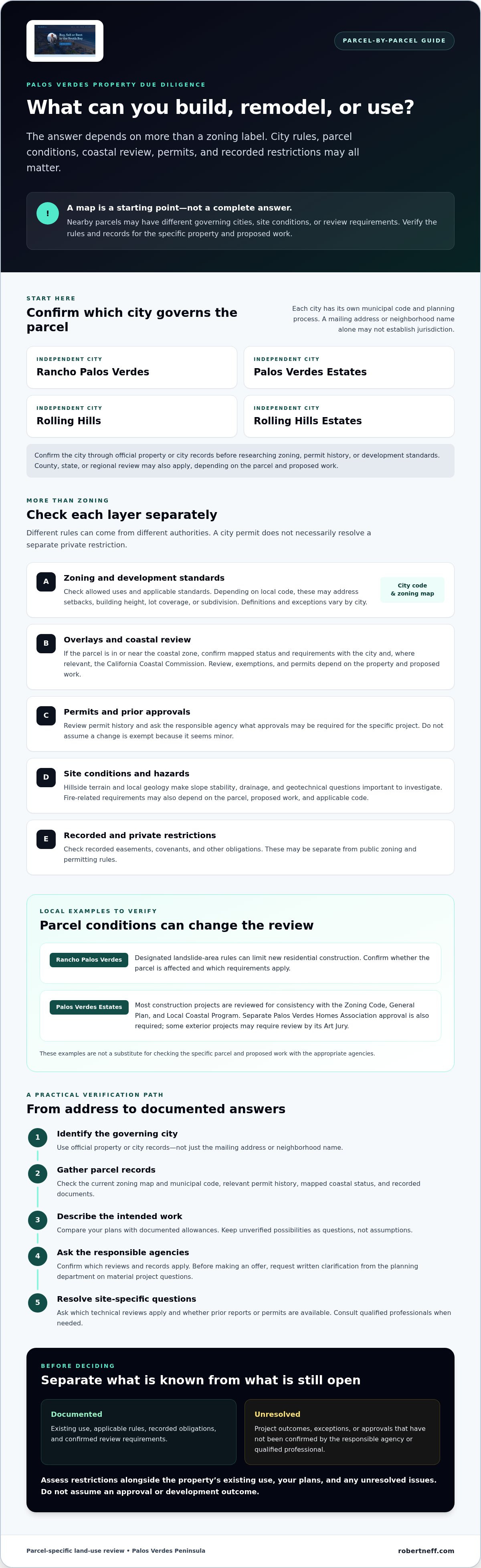
How to Verify Palos Verdes Land Use Restrictions Before an Offer
A focused review turns broad concerns into specific questions to investigate before making an offer. Use this sequence to organize your research into Palos Verdes land use restrictions and identify what still needs confirmation. For material questions about a parcel, seek answers from the relevant planning department and qualified professionals, not from a listing description.
- Confirm the jurisdiction. Identify the city and exact parcel using official records. This tells you which municipal planning department and code to consult.
- Define your intended use. Be specific about the change you’re considering, such as an addition, exterior alteration, or different property use. A clear proposal helps agencies identify relevant rules and review steps.
- Gather property records. Collect available zoning and planning records, permit history, disclosures, title materials, surveys, and other parcel documents. Note gaps rather than assuming missing records mean no restrictions exist.
- Contact the relevant agencies. Ask the city planning department which zoning district and overlays apply to the exact parcel, and whether your proposed use or improvement may require permits or discretionary review. Request links to relevant code sections and public records. Confirm coastal or other agency review, exemptions, and procedures with the responsible entity.
- Document answers and follow up. Keep agency responses, sources, dates, assumptions, unresolved questions, and next steps together. Seek written clarification on material project questions, especially before relying on a specific interpretation in your purchase decision.
What to ask the city planning department
Describe the parcel and proposed work in practical terms. Ask whether city records show applicable zoning, overlays, or prior approvals, and which code provisions govern your question. If an answer is preliminary or depends on project details, ask what information the department needs to provide a clearer response and whether its guidance is advisory or formal. Verify current submission and review procedures directly with the city.
What to review with your real estate and technical team
Compare public records with seller disclosures, title materials, surveys, and other property documents. If slope, drainage, structural conditions, or possible environmental issues affect your plans, consult appropriately qualified geotechnical, surveying, architectural, environmental, or legal professionals. A real estate professional can help organize property questions and due diligence, but technical and legal determinations belong with the relevant agency and qualified specialists.
Keep confirmed facts separate from open questions. A written answer about current zoning, for example, may not determine whether a future design will be approved. Resolve key uncertainties through the appropriate channels before treating a potential improvement as feasible. See how Robert can help organize buyer-side questions.
Making a Confident Palos Verdes Property Decision Despite Restrictions
A restriction matters in relation to the property and your plans. A documented limit may not affect your decision if it doesn’t conflict with the home’s existing use or the changes you expect to make. An unresolved question about access, permits, hazards, or title documents deserves attention before you rely on an assumption. The goal isn’t to eliminate every rule, but to understand which ones matter to you.
When a restriction may be manageable, and when it needs more review
Separate confirmed constraints from open questions. A current rule may be straightforward to factor into your decision; an unclear approval history or potential site issue calls for further review. Don’t treat an existing feature as proof that future work will be approved. Outcomes depend on the parcel, current requirements, and agency review, so seek qualified guidance when a material question remains unresolved.
Plan the next steps with clear property-specific questions
Focus your remaining research on the plans that matter most. Ask what uses are documented, what changes you may want to make, whether access or title needs clarification, and which public approvals remain unresolved. A buyer’s representative can help organize records and questions, then coordinate with the relevant agencies and qualified professionals. That support can bring structure to the decision, but it can’t guarantee a permit or development outcome.
- For the home as it stands: Confirm that the documented use and property records align with your expectations.
- For future plans: Identify the specific changes you’re considering and which questions still need agency or professional review.
- For unresolved issues: Record what is confirmed, what remains uncertain, and who can provide a reliable answer.
Weigh Palos Verdes land use restrictions alongside the property’s location, existing use, your priorities, and the records you’ve reviewed. If you’re also considering a move to the area, local buying and relocation context can help you assess how a property fits your broader plans. Buyers comparing coastal communities can also consider how parcel rules differ across Redondo Beach, Hermosa Beach, Manhattan Beach, El Segundo, Palos Verdes, and Torrance.
For guidance organizing your South Bay property search, talk with Robert about your South Bay property search.
Move Forward With Property-Specific Clarity
Palos Verdes land use restrictions are one part of a property decision. Confirm the parcel’s jurisdiction, then compare zoning and other applicable rules with the home’s current use and your plans. Separate documented constraints from unanswered questions, and verify important land-use matters with the responsible agency or a qualified professional. A careful review can help you understand what is known before deciding how to proceed.
Robert Neff is a licensed California real estate agent (DRE #02442812) who represents clients buying, selling, and renting coastal homes in the South Bay. His buyer search and negotiation support can help you organize property questions and due diligence as you evaluate your options. Discuss your Palos Verdes property search with Robert to take the next step with a clearer view of the property and the questions that matter to you.
Frequently Asked Questions
What land use restrictions apply in Palos Verdes?
Restrictions depend on the parcel’s city, zoning, location, recorded documents, and site conditions. Rules may address permitted uses and development standards, while coastal or hazard review and private covenants can add separate requirements. Palos Verdes includes Rancho Palos Verdes, Palos Verdes Estates, Rolling Hills, and Rolling Hills Estates. Nearby South Bay communities, including Redondo Beach, Hermosa Beach, Manhattan Beach, El Segundo, and Torrance, have their own local rules. Verify each property individually.
Can I remodel or add to a home in Palos Verdes?
Possibly, but the answer depends on the property, proposed work, and applicable reviews. Check the city’s current zoning and permit requirements, any coastal review, and relevant private restrictions. Site conditions may also call for technical assessment. In Rancho Palos Verdes, new residential construction, including home additions, is prohibited within the designated landslide area; repair, restoration, and replacement within an existing footprint are permitted. Confirm current boundaries and requirements with the city before relying on this rule.
How do I find the zoning for a Palos Verdes property?
First confirm the parcel’s governing city using official records. Then consult that city’s current zoning map and municipal code, or contact its planning department to verify the designation and applicable provisions for the exact parcel. Ask about overlays and how the code applies to your intended use. Online maps are useful starting points, but a zoning label alone doesn’t establish that a particular remodel, addition, or change of use will be approved.
Does every Palos Verdes property need Coastal Commission approval?
No. Coastal Commission approval isn’t automatically required for every Palos Verdes property or project. Whether coastal review applies depends on the parcel’s location, the relevant local coastal program, the proposed work, and the agency with jurisdiction. Confirm coastal-zone boundaries and permit requirements with the city planning department and, when relevant, the California Coastal Commission. Don’t assume a project is exempt based only on its size or the property’s address.
Can land-use restrictions affect a property’s value?
They can influence how buyers assess a property, particularly if restrictions affect a planned use, future improvement, access, or the ability to obtain approvals. The effect isn’t automatic and can’t be determined from a zoning label alone. Consider the property’s current use, location, documented rules, and your plans. For a specific valuation question, consult a qualified real estate professional and verify regulatory or title issues with the appropriate agency or specialist.
What documents should I check before buying a Palos Verdes home?
Review the current zoning map and code, available planning and permit records, seller disclosures, title materials, and any surveys or property documents. Look for recorded easements, covenants, or conditions that may affect use or access. Ask the city whether coastal, hazard, or other review applies. If records raise questions about slopes, drainage, or structures, consult qualified technical professionals. Missing information should prompt follow-up, not an assumption that no restriction exists.
Are HOA rules the same as city land-use restrictions?
No. City land-use restrictions are public requirements, such as zoning and permit rules. HOA rules and recorded deed restrictions are private obligations that may separately govern property changes or use. A project may need public approvals and private review, and one doesn’t necessarily replace the other. Check title materials and association documents, then consult qualified legal professionals if a restriction’s meaning or enforceability is unclear. Verify public requirements with the responsible planning department.


