

The first step in selling your South Bay home may not be a repair or a fresh coat of paint. It’s understanding which decisions matter most for your property and its local market. These South Bay home seller tips focus on the coastal communities of Los Angeles County, where buyer priorities and property considerations can differ from one neighborhood to another.
If you’re unsure whether to start with repairs, staging, paperwork, or pricing, you’re not alone. Generic advice can leave out the details that shape a sale in places such as Torrance, Redondo Beach, Hermosa Beach, Manhattan Beach, El Segundo, and Palos Verdes. A clear sequence can make the process more manageable and help you focus your time and attention on decisions that fit your home.
This guide covers the key choices to make before listing, from assessing your home’s condition and preparing property records to planning presentation, timing, and pricing. Robert Neff, Ph.D., Realtor®, brings market analysis, staging, and step-by-step seller guidance together in a property-specific listing strategy. You’ll be better prepared to discuss your home’s circumstances and decide on practical next steps.
Key Takeaways
- Start by defining your goals, preferred timing, and the home’s current condition so your first steps fit your situation.
- Use these South Bay home seller tips to distinguish essential upkeep from optional improvements before investing time or money in preparation.
- Organize property records early and consider how presentation and documented maintenance needs may shape your listing plan.
- Adapt the path from preparation to offer review to your household’s needs, occupancy, and property condition.
- A coordinated listing strategy can bring market analysis, staging, pricing, and seller guidance into one property-specific plan.
South Bay home seller tips start with your goals and local context
Selling a home can bring a long list of decisions, but you don’t have to make them all at once. An ordered plan starts with your goals, the property’s current condition, and your preferred timing. The most useful South Bay home seller tips help you decide what matters first instead of pushing every seller toward the same preparation plan.
Clarify what a successful sale means for your household
Success may mean coordinating a sale with a move, limiting disruption to daily life, or prioritizing financial goals. If you’re relocating, you may need to align the sale with a new home or lease; for homeowners coordinating an international move or managing property abroad, visit Kincade International Direct Sales to explore commission-free residential marketing models in markets like Sydney. If your next purchase depends on selling first, that contingency can shape your preferred timing and the flexibility you need. Before discussing a listing plan, write down your priorities, constraints, and questions. For example, note any dates you need to work around, whether the home will remain occupied, and how much time you can devote to preparation. That gives the planning conversation a practical starting point.
Why South Bay location matters to a seller plan
Here, “South Bay” means the Los Angeles County region, not the separate area around San Francisco Bay. The South Bay region includes communities with different settings and property characteristics. A coastal home in Redondo Beach, Hermosa Beach, or Manhattan Beach may call for a different presentation discussion than a home farther inland in Torrance. El Segundo and Palos Verdes bring their own local context, too. These are starting points for property-specific planning, not assumptions about who will buy or what a home will sell for.
Location can inform which features to highlight, what condition questions to address, and how to describe a home’s setting. The plan should still begin with the individual property. Two homes in the same city can differ in upkeep, layout, and seller needs, so a neighborhood name alone isn’t a preparation strategy.
Begin with this short checklist:
- Clarify priorities: Rank timing, convenience, certainty, and financial goals.
- Review the property: Note visible upkeep needs, completed work, and questions to investigate.
- Organize records: Gather available documents about the home and past work.
- Plan next steps: Use your goals and the property’s condition to shape preparation and listing discussions.
With those basics in view, you can move into repairs, records, and presentation in a deliberate order. A local market analysis and a property-specific conversation can connect your priorities to a listing strategy without treating every South Bay home alike.
How to prepare a South Bay home for buyers without over-improving
Preparation works best as a sequence, not a renovation list. Start by assessing the home’s condition, then identify priorities, organize available records, and plan how to present the property. These South Bay home seller tips can help you focus on work that suits your home and timeline instead of assuming every update will improve the sale.
Which repairs or updates deserve attention before listing?
Walk through the home and note visible maintenance needs separately from cosmetic preferences. Look at both interior and exterior areas, and write down specific observations rather than a general note such as “needs work.” A concern that affects the home’s function or condition deserves a different conversation from a finish you’d simply like to refresh. Priorities depend on what you find, how soon you plan to list, and what presentation makes sense for the property. Not every renovation is necessary, and no update guarantees a particular buyer response.
For coastal properties, include exterior areas in your review. Where present, note signs of wear that may relate to wind, moisture, or salt exposure. These are observations to assess at the individual home, not defects to assume in every coastal property. Keep the goal practical: understand the home’s condition before deciding whether to address an item, document it, or leave it as is.
Organize property information before showings begin
Gather records you already have for improvements, major systems, warranties, and routine maintenance. A simple folder or digital file can make it easier to find details and explain the home’s history during buyer conversations. Organized information doesn’t replace required disclosures, but it can help keep discussions clear and grounded in what you know.
Disclosure requirements can depend on the circumstances and may change. Verify current California requirements and forms through the California Department of Real Estate and appropriate professional guidance before completing sale documents. Avoid relying on an old form or assumption when preparing information for a transaction.
Once condition and records are in view, plan presentation around the property rather than chasing a model-home standard. Staging can be part of that discussion, but it should complement the home and the broader listing plan. Continue with the dedicated South Bay staging resource for more on presentation choices.
- Assess: Record visible maintenance concerns and features to highlight.
- Prioritize: Separate practical needs from optional cosmetic projects.
- Organize: Collect available records and note any information that needs follow-up.
- Present: Choose a preparation and staging approach suited to the home and listing timeline.
Robert Neff, Ph.D., Realtor®, incorporates market analysis, staging, and strategic pricing into a coordinated listing plan. To discuss how your property’s condition and circumstances may shape preparation, connect with Robert about your South Bay home.
Compare South Bay selling decisions by property, buyer fit, and timing
A nearby sale can offer useful context, but it isn’t automatically a close comparison. A home’s location, property type, condition, features, and sale timing all affect how relevant another transaction may be. Comparable homes need context beyond their headline sale prices. Use nearby sales to inform questions about your property, not to assume it will follow the same path.
What makes one South Bay home a useful comparison for another?
Start with meaningful similarities. A detached home may be less comparable to a nearby condominium than the map suggests. Differences in condition, layout, outdoor space, or distinctive features can also change how two properties should be considered together. Timing matters, too: a sale from a different market moment may provide less relevant context than a more recent one. A local market analysis can help weigh these factors without reducing the discussion to one number.
| Seller priority | Questions to consider |
|---|---|
| Move-in-ready presentation | Which features and spaces should the presentation bring forward? What upkeep is already complete? |
| Documented maintenance needs | Which concerns are supported by records? Would addressing them before listing fit the property and timeline? |
| Timing and household logistics | Will the home be occupied during preparation and showings? What schedule can the household reasonably manage? |
| Comparable-sale context | Do the properties share a similar location, type, condition, features, and sale period? |
How buyer fit can inform presentation choices
Presentation should help people understand the home as it is. A layout, outdoor area, or particular feature may suggest what to emphasize, but that’s a possibility to assess against the property and local context, not a promise about buyer demand. A coastal setting and a more inland location may raise different questions about which aspects of a home to highlight. The specific property should guide the choice.
Move-in-ready presentation and addressing documented maintenance needs aren’t always competing paths. A seller may be able to prepare the home for clear, appealing presentation while deciding separately how to handle known upkeep concerns. The right balance depends on condition, timing, and household needs. For broader seller considerations, see Forbes Advisor’s Pro Tips for Selling, then consider how those ideas apply to your home.
These South Bay home seller tips are most useful when each decision is tested against your property, not borrowed wholesale from a nearby listing. Occupancy may limit when preparation can happen or how showings are arranged. A thoughtful plan accounts for those practical constraints alongside presentation and comparable-sale context.
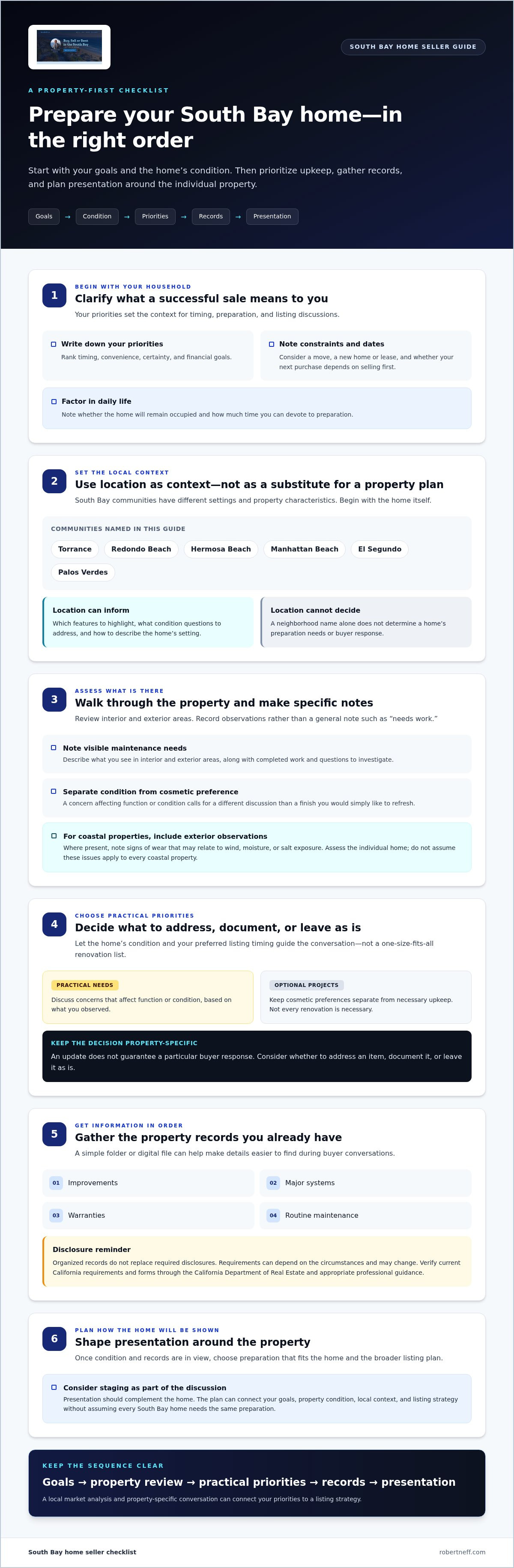
Seller Checklist: From Preparation to Listing
A checklist makes the process easier to manage, but it should be a guide rather than a rigid formula. Your South Bay home seller tips checklist may need to shift around occupancy, household schedules, property condition, and the timing of your move.
What should sellers have ready before the home is listed?
Gather the information you have and identify what still needs discussion. Not every home requires the same preparation or records. Agree early on communication preferences, showing constraints, and how much notice your household needs.
- Set your priorities. Note your preferred timing, household needs, and the practical limits that could affect the sale.
- Collect property information. Gather available facts about the home, improvement records, system information, warranties, and maintenance notes. Write down questions for the listing discussion.
- Review condition and preparation. Identify visible upkeep needs and presentation priorities. Decide what fits the home and your timeline instead of assuming every project is necessary.
- Plan the listing launch. Discuss market analysis, pricing strategy, staging, and marketing as connected parts of the listing plan.
- Set showing routines. Coordinate access and schedules. Plan where pets and valuables will be during showings, and establish a simple reset routine that works for the household.
- Review offers thoughtfully. Consider the full terms, not only the offered price, before deciding how to respond.
A consistent showing routine can reduce last-minute decisions. For example, agree on where everyday items will go and how the home will be reset after use. Keep the plan realistic, especially if the property will remain occupied during showings.
How should a seller review incoming offers?
Offer terms can affect timing and the steps required to reach closing. Review contingencies, financing structure, proposed dates, and practical fit alongside price. A term that seems attractive in isolation may not align with your move or other priorities. Robert Neff can help you understand each offer’s terms and practical implications before you decide how to respond.
Robert Neff, Ph.D., Realtor®, provides step-by-step seller guidance for South Bay coastal properties. Explore a tailored selling plan with Robert to connect your priorities, property, and next steps in one coordinated approach.
Plan your South Bay sale with local, property-specific guidance
The central idea behind useful South Bay home seller tips is simple: sequence decisions around the seller, the home, and its local context. Start with what you need from the sale, then consider the property’s condition, relevant market information, and preparation that fits your timing. A plan should guide decisions without promising a particular sale price, timeline, or result.
What a property-specific listing plan can bring together
A thoughtful listing plan connects your priorities to the home itself. It can bring together a property review, market analysis, preparation choices, staging, pricing strategy, and marketing decisions. Each part informs the next: the home’s features and condition shape presentation, while market context helps frame pricing and positioning. This is more useful than treating a general checklist as a formula for every property.
For a closer look at the broader process, explore the South Bay Coastal Home-Selling Guide. Its advice can complement a conversation focused on your own home, circumstances, and next steps.
Take the next step with a South Bay real estate guide
Robert Neff, Ph.D., Realtor®, provides residential listing representation for South Bay coastal properties, with step-by-step guidance shaped around the seller and home. His approach brings market analysis, staging, strategic pricing, and listing marketing into a coordinated plan. These are tools for informed decision-making, not guarantees of a specific outcome.
A useful first discussion can cover your goals, preferred timing, the property’s current condition, and questions about preparation or marketing. From there, you can consider sensible next steps in an orderly way, whether you’re planning ahead or preparing to list soon.
Discuss your South Bay home-selling plan with Robert and start shaping a strategy around your property and priorities.
Move forward with a South Bay selling plan
A thoughtful sale begins with your priorities, not a one-size-fits-all renovation list. Assess the home’s condition, organize available records, and weigh preparation choices against your timing and household needs. Then consider comparable properties in context, including differences in location, condition, features, and sale timing.
These South Bay home seller tips offer a sequence for making decisions with greater clarity. A property-specific listing strategy can bring market analysis, staging, and strategic pricing together, while keeping your goals and the home’s circumstances in view. No plan can guarantee a particular price or timeline, but informed guidance can help you understand the choices ahead.
Robert Neff, Ph.D., Realtor®, provides residential listing representation in South Bay coastal communities. He’s a licensed California Realtor® with DRE license number 02442812. Discuss your South Bay home-selling plan and take a measured next step with local guidance. With a clear plan, you can approach the process with greater confidence.
Frequently Asked Questions
What should I do first when selling a home in the South Bay?
Start by clarifying your goals, preferred timing, and household constraints. Then review the property’s condition and make a note of questions about preparation, records, and the sale process. These South Bay home seller tips begin with understanding your circumstances, not choosing renovations immediately. A local market analysis can help connect your priorities with a practical listing plan for your home and community.
How do I prepare my home for sale without over-improving it?
Assess the home first, then distinguish visible maintenance needs from optional cosmetic projects. Consider the condition of each area, your listing timeline, and how the work fits your presentation goals. Gather available records for improvements and maintenance before deciding what to address. Staging can help shape presentation, but it doesn’t mean every room needs a redesign or every renovation is necessary for a thoughtful listing plan.
Do South Bay home seller tips differ by city?
Yes, local context can affect which property features and preparation questions deserve attention, but the home itself matters most. A coastal property in Redondo Beach, Hermosa Beach, or Manhattan Beach may raise different presentation considerations than a home in Torrance or El Segundo. Palos Verdes has its own property context, too. These differences aren’t rules about buyer preferences; they’re reasons to build a plan around each home.
How should I decide which homes are comparable to mine?
Look beyond distance and headline sale price. Consider whether another property shares a similar location, property type, condition, layout, features, and sale timing. A nearby home may differ in important ways, while a slightly farther sale may offer relevant context if the properties have more in common. A local market analysis can help weigh those details as part of a listing strategy, rather than treating one sale as a direct prediction.
Should I make repairs before listing my South Bay home?
Not automatically. First document visible maintenance needs and separate them from cosmetic preferences. The right decision depends on the home’s condition, your timeline, and the role an item may play in buyer conversations. For a coastal property, note exterior wear if present, but don’t assume every home has the same exposure-related issues. Discuss the observations within a property-specific plan before committing to work.
What should I consider when reviewing an offer on my home?
Review the full terms, not just the offered price. Consider proposed timing, contingencies, financing structure, and whether the terms fit your move and household priorities. These details can affect how the transaction proceeds, so compare offers in light of your goals rather than focusing on one headline figure. Robert Neff can explain the terms and help you understand their practical implications before you decide how to respond.
When should I speak with a South Bay listing agent?
Speak with a listing agent while you’re still planning, before major preparation decisions or a firm launch date. An early discussion can help connect your goals, the home’s condition, local market context, and potential next steps. Robert Neff, Ph.D., Realtor®, provides residential listing representation in South Bay coastal communities, including market analysis, staging, strategic pricing, and step-by-step seller guidance tailored to the property.


